

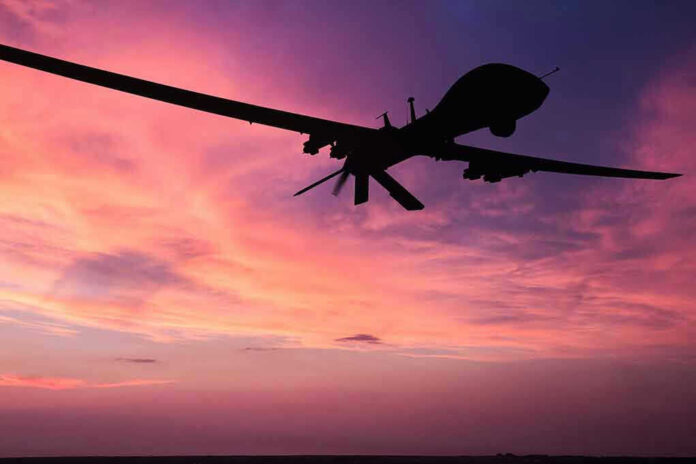
After years of bureaucratic inertia and falling behind global adversaries, a four-day U.S. military drone exercise in Alaska has finally ripped the mask off America’s drone warfare shortcomings—forcing the Pentagon to face facts, and unleashing a sweeping overhaul that could finally put American innovation back on top.
At a Glance
- The U.S. military’s Alaska drone exercise exposed alarming technological and operational gaps compared to China and Russia.
- Trump’s Defense Secretary Pete Hegseth has announced aggressive reforms to Pentagon procurement, aiming for drone “domain dominance” by 2027.
- Procurement authority is being delegated to frontline personnel, empowering rapid acquisition and adaptation of drones for real battlefield needs.
- The reforms prioritize “Buy American,” leveraging domestic manufacturers and private capital to scale production and innovation.
- Every U.S. combat squad is expected to have access to low-cost, expendable drones by the end of 2026, with a focus on Indo-Pacific readiness.
Alaska Exercise Exposes America’s Drone Deficit
For decades, Americans have been told we had the best military technology in the world. Then came the Alaska drone exercise—where U.S. forces, flying American-made drones, came face-to-face (or drone-to-drone) with the reality that China and Russia have already leapfrogged us with swarms of cheap, expendable, AI-enhanced units. The whole embarrassing display played out in the unforgiving Yukon Training Area, chosen specifically because it mirrors the harsh, strategic terrain we’d face in the Indo-Pacific. The message was as clear as an Alaskan sunrise: the Pentagon’s red tape and outdated procurement policies have left our troops outgunned in the one domain that’s now defining modern warfare.
It’s not some technicality or bureaucratic hiccup. The war in Ukraine has proven that drones aren’t just fancy gadgets—they’re the backbone of 21st-century combat. Yet our own manufacturing base has been hamstrung for years by risk-averse bean counters, and policies that make it easier for a Chinese factory to churn out a thousand drones than for a U.S. commander to get one new system approved. Meanwhile, adversaries have been integrating drone swarms with battlefield AI, making our hardware look like it belongs in a museum gift shop. The Alaska exercise was the wake-up call nobody in the Pentagon could ignore, especially with American defense start-ups like Neros showing how quickly innovation can happen—if only Washington would get out of its own way.
Trump Administration’s Reforms: Unleashing American Drone Dominance
Defense Secretary Pete Hegseth wasted no time. Days after the Alaska exercise, he announced a total overhaul: procurement authority is now being pushed down the chain of command, frontline officers are empowered to buy and deploy drones as quickly as battlefield needs change, and the Pentagon is set to approve hundreds of American-made drone products for active use. Instead of waiting years for some desk jockey to sign off on new tech, our troops will get what they need, when they need it—no more excuses, no more delays.
This is more than just a policy tweak. It’s a cultural revolution for the Pentagon, one built on the June executive order “Unleashing American Drone Dominance.” Every combat squad is expected to have low-cost, expendable drones by the end of next year, with a particular focus on units facing off against China in the Indo-Pacific. Hegseth has made it clear: drones should be treated as “ammunition,” not as some delicate, bureaucratic luxury item. If it works on the battlefield, it gets bought, period. No more letting American troops operate at a disadvantage because some D.C. committee can’t make up its mind.
Can the U.S. Catch Up—or Is It Too Little, Too Late?
For years, American taxpayers have watched as their hard-earned dollars funded endless studies, endless delays, and endless excuses—while our rivals ran circles around us in military innovation. The Alaska debacle has finally forced the issue: either we catch up, or we accept second place on the world stage. The Trump administration’s reforms are undeniably bold, but experts warn that procurement reform alone won’t close the gap. Real dominance means sustained investment in R&D, relentless focus on AI integration, and a total overhaul of how we think about supply chains.
There’s no question this is a shot in the arm for American drone manufacturers and the private investors who’ve been begging for a seat at the table. If the Pentagon delivers, we could see a renaissance in American defense technology, job creation, and global leadership. But if the bureaucracy finds a way to gum up the works again, we’ll be back to watching Chinese and Russian drone swarms on the evening news—while our own troops play catch-up. The stakes couldn’t be higher, and the world is watching to see if America can get its act together when it matters most.
Sources:
Tectonic Defense: “The Quest for American Drone Dominance”
Defense News: “Hegseth calls for extensive reforms to Pentagon drone-buying practices”
Department of Defense: “Unleashing U.S. Military Drone Dominance” (official memo)