

Beijing’s calculated abandonment of Iran amid regime-threatening protests exposes a troubling reality: China’s strategic partnership with Tehran was never about loyalty—it was always about cheap oil and weakening American influence, and now that the regime wobbles, the Communist giant is quietly backing away.
Story Snapshot
- China signals distance from collapsing Iranian regime despite decades of “partnership,” rejecting security alliances as protests kill thousands
- Trump’s 25% tariffs force Beijing to choose between protecting Tehran and avoiding economic confrontation with America
- Beijing’s tepid rhetoric reveals Iran’s asymmetric dependence—China holds all leverage with alternative oil suppliers while Tehran desperately needs its top buyer
- Regime instability following June 2025’s 12-Day War with Israel exposes vulnerabilities that make Iran too risky for deeper Chinese commitments
Beijing’s Strategic Calculus Prioritizes Self-Interest Over Tehran
China welcomed the January 2026 US-Iran deescalation not out of solidarity with Tehran, but because escalation threatened the Islamic Republic’s survival and Beijing’s access to discounted crude oil. Foreign Minister Wang Yi’s January 15 call with Iranian counterpart Abbas Araghchi produced only vague calls for restraint, not concrete support, as protests raged across Iran claiming over 2,400 lives according to rights groups. Beijing’s January 5 rejection of forming a security alliance with Iran crystallized its position: Iran serves Chinese interests as an oil supplier and regional US counterweight, but Beijing won’t risk confrontation with Washington to save the regime.
Trump Tariffs Force China’s Hand on Iranian Ties
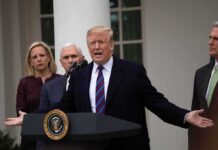
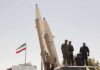
President Trump’s January 16 announcement of 25% tariffs targeting nations ignoring America’s Iran stance directly pressures China’s asymmetric relationship with Tehran. Beijing purchases sanctioned Iranian oil at steep discounts, providing the regime’s economic lifeline while supplying surveillance technology and missile components in return. Experts like Chaudet and Fulton confirm Iran is “not central to national interests” for China—a pragmatic calculation that Trump’s economic pressure exploits. China’s response vowing to “defend interests” rings hollow given its refusal to provide air defenses after June 2025’s devastating 12-Day War exposed Tehran’s military vulnerabilities and Russian defense systems’ catastrophic failures.
Protests Expose Regime Fragility and Beijing’s Limits
Surging protests following the 12-Day War reveal the Islamic Republic’s precarious grip on power, fundamentally altering Beijing’s risk assessment. China previously supplied surveillance technology to help Tehran monitor dissent, yet refused direct security guarantees as mass demonstrations erupted in mid-January 2026. This tepid response contrasts sharply with the $400 billion 25-year cooperation agreement signed in 2021, which promised energy, technology, and infrastructure investments. Analyst Rumley notes Beijing maintains the “upper hand” with alternative oil sources from Saudi Arabia and others, while Tehran desperately depends on China as its top buyer under international sanctions.
Here’s Why Beijing Is Concerned About Losing the Islamic Republic Regime https://t.co/flLq5sbomi
— capt. budd (@captbudd24) January 27, 2026
Iran’s Failed Eastward Pivot Undermines Anti-American Axis
Tehran’s attempt to pivot eastward through joining the Shanghai Cooperation Organization and BRICS with Chinese backing now appears strategically hollow as Beijing signals its unwillingness to provide meaningful support during crisis. The regime sought deeper alignment with Russia and China following the JCPOA collapse and renewed American pressure, yet both powers offer only rhetorical backing when confronted with Iran’s vulnerabilities. This dynamic bolsters American leverage in the Middle East while exposing the limits of the so-called anti-US axis. For Americans frustrated with globalist frameworks undermining national sovereignty, China’s calculated abandonment demonstrates that authoritarian partnerships dissolve rapidly when self-interest dictates—a refreshing dose of realism in international relations.
Long-Term Implications for Regional Power Balance
If the Islamic Republic collapses, China loses discounted crude but gains strategic flexibility to normalize relations with US allies including Saudi Arabia and Israel, reducing friction with Washington. Iran loses its economic lifeline and faces complete isolation, potentially ending four decades of revolutionary theocracy. This outcome would shift Middle East power decisively toward American allies, vindicating Trump’s maximum pressure approach that Beijing now tacitly accepts by refusing to bail out Tehran. The regime’s instability also exposes the weakness of SCO and BRICS as counterweights to American influence—organizations that proved unable to protect a member facing existential crisis from internal dissent and external pressure combined.
Sources:
China breathes easier on Iran deescalation, but challenges linger – Al-Monitor
How much is China willing to risk to protect its ties with Iran? – RFI
As Protests Surge, China Signals Its Distance from Tehran – FDD
Iran’s Failing Eastward Pivot: Limits and Risks of Russia-China Alignment – Washington Institute
China-Iran Relations: Decades of Cooperation Behind Today’s Rumors – Caspian Post
Iran Turns To China As Protests Surge And Trump Returns – RFERL
China Won’t Save Iran’s Regime, But Chinese Surveillance Technology Might – The Diplomat