

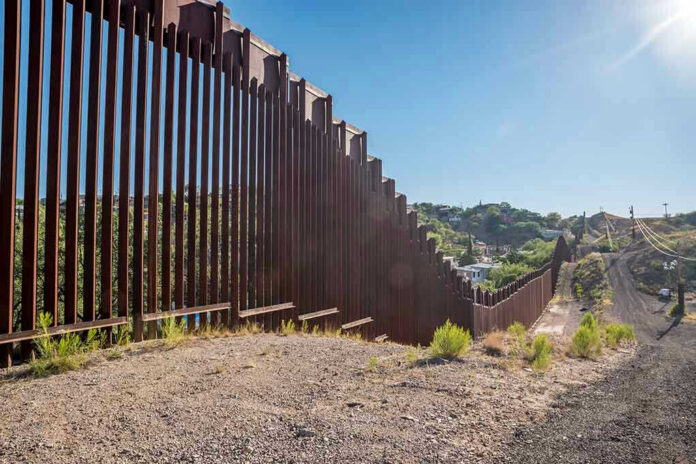
Texas ranchers along the Big Bend now face an ugly choice: sign away control of their land for a federal border wall, or risk the government dragging them into court to condemn it.
Story Snapshot
- Federal officials are pressuring West Texas landowners to sign border wall access deals under threat of condemnation and lawsuits.
- Washington is leaning on sweeping federal powers and waivers, even as Texas law itself now bans eminent domain for the state’s own wall program.
- Past border projects show a long record of rushed seizures, lowball offers, survey errors, and years-long fights over “just compensation.”
- Property-rights conservatives now face a hard question: how to secure the border without letting Washington trample the very rights the Constitution protects.
How We Got Here: Federal Power Versus Texas Property Rights
For decades, Congress has armed the Department of Homeland Security with broad power to build barriers, roads, and surveillance gear on the southern border, and to take whatever land it thinks is “essential” to control and guard that border.[1] That power includes eminent domain, the forced taking of private land for public use, so long as the government pays what it calls “just compensation.”[4] Because about ninety-five percent of Texas land is privately owned, any serious wall in West Texas almost guarantees major clashes with ranchers and families along the Rio Grande.[4]
Older wall rounds in South Texas show what this looks like in practice. After the Secure Fence Act, federal lawyers filed more than three hundred sixty eminent domain lawsuits, mostly against Texans who refused to sell.[4] More than a decade later, roughly sixty to seventy of those cases were still not fully resolved, mainly because of fights over how much the land was really worth.[4] Investigations found the government sometimes misidentified owners and property lines, paid the wrong people, and even waived normal appraisal safeguards to speed things up.[4][9] That history is why many West Texas families now eye new wall letters with deep distrust.
Big Bend Landowners Under Pressure to “Agree or Be Taken”
Today, that long-running legal machinery is rolling west into the Big Bend region. Customs and Border Protection has been sending “right-of-entry” and construction letters to landowners in remote West Texas, offering a few thousand dollars as a signing bonus if they will let surveyors and contractors onto their land for wall work.[2][6] Those letters warn that if owners refuse or delay, the government can sue to condemn the property through eminent domain.[2][3] For families who do not have teams of attorneys on retainer, that threat alone can feel like a gun to the head.
Legal analysts say landowners are often presented with three basic paths: sign a right-of-entry agreement and let federal crews in, negotiate a sale or permanent easement for what Washington claims is fair market value, or brace for a condemnation case in federal court.[3][6][14] Once the government files a “Declaration of Taking” in court, a judge can give it legal possession of the land almost right away, long before any final ruling on price.[4] That means a wall segment can go up while the family is still fighting just to be paid fairly for ground they no longer control.
Texas Says No to State Seizures, but Washington Still Pushes
Many conservative Texans thought they had drawn a line in the sand in 2021, when the state Legislature barred the use of eminent domain for the state-run border wall program.[4][5] Under that law, Texas officials must rely on voluntary easements, paying a one-time fee for permission to build wall on a strip of private land, rather than seizing it outright.[4][5] As a result, at least one-third of landowners approached by the state have refused, forcing Texas to build in remote ranch areas and leave big gaps where families stand firm.[4][5]
But that state-level protection does not bind the federal government. Washington still leans on its own statutory authority, backed by the Illegal Immigration Reform and Immigrant Responsibility Act and later amendments, to condemn land in Texas for a federal wall, regardless of state policy.[1][15] That sets up a clash familiar to many conservatives: a border state tries to respect property rights, while distant federal agencies insist their security mandate lets them push past local will. For West Texas ranchers, the message feels clear—if you will not agree, Washington will come take what it wants anyway.
Waivers, Lawsuits, and a New Fight in Big Bend
On top of seizure power, federal officials have also claimed the right to waive dozens of laws that would normally slow or restrain big projects. Under earlier statutes, the Secretary of Homeland Security can set aside “all legal requirements” seen as obstacles to fast construction of barriers and roads near the border.[1][15] That waiver tool has been used before to bypass environmental rules, air and water protections, and even some safeguards meant to protect landowners in condemnation cases.[1][4] Critics argue this leaves families facing a stacked deck, where the same agency that wants their land also erases rules designed to keep the process fair.[4][9]
In far West Texas, the threat of land seizures for a border wall has families on edge.
In the Big Bend region, where some families have lived for generations, government letters seeking access to their land is sparking fear and resistance. https://t.co/iM6GEXs14i
— Texas Tribune (@TexasTribune) June 16, 2026
Now, in the Big Bend area, that waiver fight is back in court. A new lawsuit from landowners and advocacy groups claims the Department of Homeland Security crossed a constitutional line by waiving dozens of environmental and cultural-resource laws to push a sweeping border wall through the region.[2] The suit leans on the “major questions” doctrine, arguing that Congress never clearly approved such massive, cross-border projects without stricter limits and debate.[2] While the case centers on environmental waivers, its outcome could shape how far Washington can go in fast-tracking wall construction over local objections.
What Property-Rights Conservatives Need to Watch
For Trump voters who want a secure border and a sovereign nation, none of this is simple. There is no serious question that the federal government has power to build defenses and control our border, and many Texans living with cartel traffic and human smuggling welcome tougher security.[1][7] The concern is how that power is used. Past wall rounds show federal agencies cutting corners, mismanaging cases, and leaving ordinary families in legal limbo for years while concrete and steel already stand on their former land.[4][9][12]
Conservatives who care about the Constitution and limited government will want to focus on two things as this West Texas battle unfolds. First, whether landowners are truly given a fair choice, with honest surveys, transparent offers, and full due process before any bulldozers roll.[3][9][11] Second, whether Congress reins in waiver powers that let unelected officials wipe away whole chunks of law whenever they declare a rush. Border security is vital, but if Washington can threaten to seize ranchland today with minimal checks, it can threaten churches, businesses, and homes tomorrow. Strong borders should never come at the price of surrendering core property rights that make this country worth defending in the first place.
Sources:
[1] Web – Texas Landowners Face a Difficult Decision: Allow Border Wall or Lose …
[2] Web – DHS waives certain legal regulations to expedite border wall …
[3] Web – Lawsuit Challenges Big Bend Border Wall Construction
[4] Web – [PDF] obstructing human rights: the texas-mexico border wall
[5] Web – [PDF] Eminent Domain Along the Southern Border: Government Seizures …
[6] Web – Official Border Wall plans have been released for the Big Bend. If …
[7] Web – Response to Public Comments Regarding the Construction of …
[9] Web – As landowners resist, Texas’ border wall is fragmented and built in …
[11] Web – Angry Texas landowners confront feds over sloppy border wall plans
[12] Web – Zapata County landowners say border wall contractors … – TPR
[14] Web – Texas Landowners Dig In to Fight Trump’s Border Wall – VOA
[15] Web – Texas landowners in the Big Bend region are fighting federal efforts …
© patriotspotlight.org 2026. All rights reserved.