
A border that terrorists once exploited is reopening—but only under strict screening that shows what “secure humanitarian access” actually looks like.
Story Snapshot
- Gaza’s Rafah crossing with Egypt reopened Feb. 2, 2026, on a limited, pedestrian-only basis tied to phase two of the U.S.-brokered ceasefire.
- Initial movement is capped at about 50 people per direction per day, prioritizing medical patients leaving Gaza and returnees coming back.
- Israel, Egypt, and EU border monitors are central to vetting and processing; Palestinian involvement is described as limited.
- No goods are permitted at this stage, highlighting the “step-by-step” nature of the reopening and ongoing security concerns.
Rafah Reopens Under Tight Controls, Not Open-Border Politics
Egypt reopened Gaza’s Rafah border crossing on February 2, 2026, but the terms make clear this is not a free-flowing border. Reporting indicates the crossing is operating on a limited basis after a pilot run the day before, with movement initially capped at roughly 50 Palestinians per direction daily. The traffic is described as mainly medical cases exiting Gaza and Palestinians returning, with the process embedded in phase two of the ceasefire.
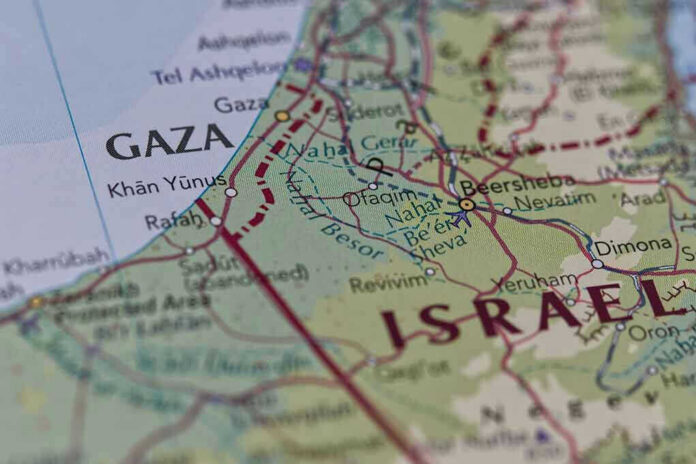
Israel’s security posture is central to the arrangement. The crossing sits at a sensitive point: Rafah was effectively Gaza’s main non-Israeli gateway before the war, yet it also became associated with smuggling threats that Israel cited when it seized the area in May 2024. The current reopening reflects that history. The early design prioritizes people over cargo, and it relies on layered checks intended to prevent the crossing from becoming a pipeline for weapons or operatives.
How the Vetting Works: EU Checks, Then Israeli Oversight
Border procedures described in the reporting lean heavily on third-party and Israeli verification. The European Union Border Assistance Mission is cited as leading key checks, while Israel’s military retains oversight and a secondary screening role for entrants. The flow is not symmetrical in practice: outbound passengers include medical patients—Israel’s prime minister publicly referenced a daily allowance of patients plus accompanying relatives—while inbound traffic focuses on returnees vetted through the same security framework.
Egypt’s priorities are also baked into the structure. Cairo has insisted on bidirectional movement in part to prevent the crossing from becoming a one-way exit that fuels permanent displacement. Egyptian officials are described as managing crossing operations and preparing significant hospital capacity for incoming medical cases, while still keeping traveler numbers constrained. The cap matters because it turns Rafah into a narrow relief valve rather than an uncontrolled migration corridor—an approach many conservatives will recognize as basic sovereignty.
Humanitarian Pressure Meets Reality: 20,000+ Medical Cases, But No Goods Yet
Humanitarian need remains severe, with reports citing roughly 20,000 to 22,000 Palestinians in Gaza seeking medical evacuation. Aid groups have pushed for broader access, but the current reopening is intentionally incremental. At this stage, the crossing is described as pedestrian-only and not open to goods, undercutting any claim that Rafah’s reopening alone solves the broader supply crunch. For families waiting on reunification or treatment, 50 per day is movement—but not relief at scale.
Ceasefire Phase Two: A Test of Enforcement, Not Just Promises
The reopening is tied to the second phase of the U.S.-brokered ceasefire that followed phase one’s hostage and prisoner exchanges, increased aid, and partial Israeli withdrawal. Reporting links the timing to the recovery of the last hostage in the previous week, which helped unblock implementation steps. The political significance is that the crossing is being reopened as part of a monitored sequence, rather than through trust-based assurances that have failed repeatedly in the region.
Some coverage frames the reopening as a milestone and others as too limited, but the hard fact remains: the system is built around verification, not slogans. Where details are uncertain, the most responsible conclusion is that expansion depends on whether the pilot-plus-limited reopening works without triggering new security incidents. That is also why the absence of goods matters—cargo is harder to inspect, easier to exploit, and historically central to smuggling disputes around Rafah.
What to Watch Next: Expansion, Cargo Decisions, and Compliance
Next steps hinge on whether authorities decide the process is functioning and secure enough to scale. Reporting suggests a phased approach where the daily cap could increase if the system proves viable, but no timeline is guaranteed. The biggest signal will be whether goods are eventually permitted, and under what inspection regime, because that will reveal how much confidence the parties have in enforcement. Until then, Rafah’s reopening is best understood as controlled access, not normalization.
Sources:
Gaza’s Rafah Border Crossing with Egypt Reopens for Limited Traffic
Israel reopens Rafah Crossing with Gaza in limited phase 2 of ceasefire