
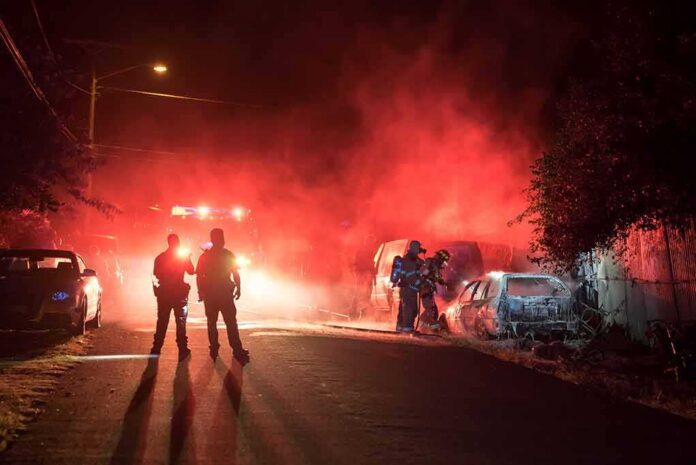
A natural gas pipeline fire near Ward, Alabama, shot flames into the night sky and forced an emergency shutdown, yet officials reported no injuries.
Story Highlights
- Southern Natural Gas reported a late-night gas release and fire near Ward, Alabama.
- Crews shut and depressurized the affected pipeline segment; no injuries were reported.
- Local firefighters battled a secondary brush fire as responders secured the scene.
- An outage reduced line capacity east of the York compressor station, with deliveries reported stable at the time.
What Happened Near Ward, Alabama
Southern Natural Gas said a natural gas release and fire occurred around 11:27 p.m. Central Time on November 21 near Ward in Sumter County. Company teams secured the site, shut the impacted segment, and depressurized the line to stop the flow of gas. The operator said no injuries were associated with the event. A county leader also confirmed that no one was hurt and no structures were damaged as of Sunday, based on local briefings and checks.
Local news and first responders described dramatic flames that were visible from long distances. The Pleasant Hill Volunteer Fire Department reported a major pipeline explosion and a secondary brush fire that drew help from nearby volunteer units. Social videos showed an intense glow and loud roaring sound as the gas burned off. Reports said emergency personnel and company crews worked together to secure the area and control the fire’s spread while gas pressure dropped on the shut line.
What We Know About Operations and Service
Pipeline postings identified an unscheduled outage on the South Main Loop Line east of the York compressor station. Reporting described a temporary reduction in carrying capacity on that section. Southern Natural Gas said customer deliveries were not impacted at that time. Those two facts can both be true: a line can lose capacity and still meet deliveries for a time through system balancing, storage, or rerouting. Details on exact flows were not released publicly.
Officials did not provide the line’s exact specifications in early updates. Public reports did not include diameter, operating pressure, age, or milepost of the affected segment. The company said the cause remains under investigation. That leaves open several common possibilities until investigators test the failed steel, review maintenance logs, and match any alarms with control-room records. Early force-majeure labels or outage notices define contracts and flows, not root cause.
Safety, Response, and Why Cause Takes Time
County officials said no structures were damaged, and no evacuations were confirmed by authorities in the main reports used here. Some outlets mentioned reported evacuations, but the clearest aligned facts from the operator and a named county leader were that no injuries occurred. Early updates often focus first on shutting valves, cooling hot spots, checking air for gas, and guarding roads. A full timeline of 911 calls, arrival times, and valve closures was not released in initial coverage.
Federal data provide a reality check on how these events get solved. Government Accountability Office analysis of Pipeline and Hazardous Materials Safety Administration records shows an average of 61 significant onshore natural gas transmission incidents per year from 2010 to 2022. Equipment or material problems were the leading named causes in that set, with corrosion also common. Excavation damage has played a role in some cases, especially in sensitive areas.
Community Impact and Shared Concerns
Residents saw the sky light up and feared the worst. People on both the left and the right share a simple ask after scenes like this: tell the truth fast, fix what broke, and show proof. That means releasing investigation records, publishing photos of the pipe, and explaining the fix in plain language. Clear answers help rebuild trust when people worry that large companies and distant officials put public safety behind profits or paperwork.
🚨#BREAKING: Watch as huge plumes of flames rise as a gas pipeline explodes
At this time, numerous emergency crews are responding to a massive pipeline explosion in Ward, Alabama. Towering plumes of fire can reportedly be seen for miles…. pic.twitter.com/oEGHZx1Q2d
— Storm Leaks (@StormLeaksHQ) November 23, 2026
This case offers a few practical steps. First, publish the official incident report once complete, including metallurgical findings and any corrective actions. Second, share a verified response timeline, from first calls to full shutdown and gas testing. Third, post an accessible summary of any capacity workarounds used to keep customers supplied. These steps are not partisan. They respect the public’s right to know and reduce rumor and fear when a bright fire fills the sky.
Sources:
thegatewaypundit.com, yahoo.com, queencitynewsfeed.com, energywar.net
© patriotspotlight.org 2026. All rights reserved.