

Federal authority triumphs as the Supreme Court empowers ICE to resume immigration enforcement in Los Angeles, igniting fierce debate over constitutional rights and local resistance.
Story Snapshot
- The Supreme Court’s 6-3 decision restores ICE’s ability to conduct immigration stops in Los Angeles while litigation continues.
- The ruling reverses a lower court ban that restricted ICE from using race, language, or location as criteria for stops.
- Federal priorities now supersede sanctuary city resistance, with immediate impact on enforcement operations.
- The decision intensifies the national clash over civil liberties, local autonomy, and public safety.
Supreme Court Restores ICE Enforcement Power Amid Sanctuary City Pushback
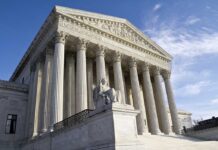
The Supreme Court issued a 6-3 decision granting the federal government’s request to stay a lower court order that had sharply limited ICE’s enforcement actions in Los Angeles. This ruling empowers ICE agents to resume stops based on broad criteria—including race, language, and type of work—pending further litigation. The decision marks a direct intervention in local policies, sending a clear message about federal authority in immigration matters during a period of heightened political conflict.
Los Angeles, designated as a sanctuary city, has long resisted collaboration with federal immigration authorities. The original district court order, issued in July 2025, sought to prohibit ICE from stopping individuals without reasonable suspicion, particularly if criteria like race or location were used. The Supreme Court’s order, however, temporarily lifts these restrictions, reflecting increased support for aggressive enforcement by the Trump administration and federal agencies. This move immediately affects how ICE operates in one of the country’s largest immigrant communities.
Federal vs. Local Authority: Constitutional Tensions and Practical Impact
The Supreme Court’s intervention highlights enduring tension between federal supremacy and local autonomy in immigration enforcement. Federal agencies, led by the Department of Homeland Security and ICE, argue that broad enforcement powers are essential for public safety and upholding immigration law. Meanwhile, local officials and advocacy groups express concern that these practices enable racial profiling and erode Fourth Amendment protections against unreasonable searches and seizures. The result is a renewed debate over the balance between national security priorities and individual constitutional rights.
Civil rights organizations, including the ACLU, have condemned the Supreme Court’s decision as a setback for community trust and due process. They warn that resuming broad enforcement could heighten fear among immigrant communities and undermine local efforts to protect civil liberties. On the other hand, DHS and the Trump administration celebrate the ruling as a victory for law enforcement, public safety, and the rule of law. These divergent perspectives underscore the broader national conflict over immigration policy, federal overreach, and the rights of states and cities to set their own priorities.
Immediate and Long-Term Implications for Communities and Policy
In the short term, ICE’s restored enforcement authority is likely to increase arrests and detentions in Los Angeles, disrupting workplaces and communities. The decision also sets a precedent for future federal interventions in sanctuary jurisdictions, potentially affecting cities nationwide that have enacted policies to limit cooperation with federal immigration authorities. Legal experts note that the Supreme Court’s order is procedural and does not resolve the underlying constitutional questions, leaving the door open for further litigation and possible changes in enforcement standards.
SCOTUS Allows ICE Agents to Keep Arresting Illegal Aliens in Sanctuary City Los Angeleshttps://t.co/rsKtX07Zfe
— Rebecca Kovach (@RebeccaKov63869) September 9, 2025
Long-term outcomes hinge on ongoing legal battles and future court decisions, including a scheduled district court hearing on September 24, 2025, which could issue a preliminary injunction. The case will likely shape how “reasonable suspicion” is interpreted in immigration stops, influence relations between federal and local governments, and mobilize voters ahead of upcoming elections. For conservative audiences, the Supreme Court’s decision signals a reaffirmation of federal authority, constitutional order, and the prioritization of national security over local resistance and activist-driven policies.
Sources:
Supreme Court Lifts Lower Court Ban on ICE Immigration Enforcement in Los Angeles | Axios
DHS Scores Major Victory in Supreme Court | Department of Homeland Security
U.S. Supreme Court Grants Stay in LA Raids Case | ACLU of Southern California