
patriotspotlight.org — Amid media frenzy and Silicon Valley pressure claims, President Trump hit pause on an AI cybersecurity order to keep America’s edge over China—and doubled down on a dominance-first policy.
Story Highlights
- Trump postponed an AI order after saying parts could hurt U.S. leadership in the global AI race [3][4].
- January 23, 2025 order set a clear policy: remove barriers and sustain U.S. AI dominance [2].
- Agencies were directed to review and unwind conflicting Biden-era AI actions [1][2].
- December 2025 framework reaffirmed national AI dominance with minimal burdens [5].
Trump’s Pause Aimed at Protecting U.S. AI Lead Over China
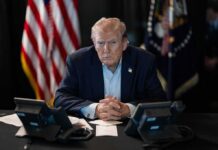
President Trump told reporters he postponed signing an AI cybersecurity executive order because there were “certain aspects” he did not like and he feared it could hinder American competitiveness at a critical moment. He explicitly linked the delay to ensuring the United States stays ahead of China, stressing the nation is “leading” and should not impose rules that slow growth or jobs tied to artificial intelligence. Those statements frame the pause as a strategic safeguard, not a retreat [3][4].
Trump’s remarks align with a broader policy throughline: America must lead the AI race, avoid unnecessary red tape, and keep industry moving. In multiple appearances, he emphasized that other countries are behind, that the United States and China are “fighting for it,” and that policy should not clip American wings. While opponents portrayed the decision as chaotic or billionaire-driven, the on-record rationale focused on preserving national advantage and employment in a fast-moving sector [3][4].
January 2025 Order: Removing Barriers and Resetting Agencies
Days after the postponement episode, the White House released “Removing Barriers to American Leadership in Artificial Intelligence,” an executive action that stated, as national policy, the goal to “sustain and enhance America’s global AI dominance.” The order revoked or targeted for review prior actions that created barriers to U.S. innovation. It set a clear standard: when existing rules conflict with national AI leadership, agencies must suspend, revise, or rescind those obstacles to keep America first [2].
Legal analysis at the time underscored the order’s direction to examine Biden-era actions tied to the 2023 executive order and to align federal policy with the new dominance-first posture. According to that contemporaneous review, the White House called for immediate agency reevaluations, with inconsistent directives to be paused or reversed. The emphasis was practical: remove friction, promote investment, and ensure a predictable path for research, deployment, and commercialization in the United States [1].
December 2025 Framework Reaffirms Dominance With Minimal Burden
By December 2025, the administration cemented the approach with “Ensuring a National Policy Framework for Artificial Intelligence.” That action again made explicit that sustaining and enhancing United States global AI dominance is the nation’s policy objective. It also prioritized a “minimally burdensome national standard,” addressing fragmentation risks from conflicting state rules and giving developers and operators clearer guidance to build, scale, and hire domestically without navigating a patchwork [5].
The two bookending actions—January’s barrier-removal order and December’s national framework—provide context for the earlier postponement. The throughline is consistent: limit bureaucratic drag, maintain national security and prosperity through strength, and prevent regulatory overreach from ceding the field to Beijing. That stance resonates with conservatives who watched prior administrations inflate rulebooks that punished innovators while leaving borders open and budgets bloated, feeding higher prices and weaker industry competitiveness [2][5].
Claims of Tech Influence and the Evidentiary Gaps
Media narratives suggested last-minute calls with prominent technology leaders pressured the White House to pull the earlier draft. The available record here, however, lacks primary documents proving that calls drove the decision. There are no call logs, formal readouts, or sworn statements tying specific executives to a direct withdrawal request in the supplied materials. What is documented are Trump’s on-camera explanations and the subsequent policy trajectory emphasizing American dominance, not a safety-first slowdown [3][4].
Trump Says He's Postponing Signing an Executive Order on AI out of Concern It Would Hurt AI Industry https://t.co/eD5Ljrk6vs
— Outspoken_T_From_Tha_Lou (@TRUMPGIRL_STL) May 22, 2026
Key gaps remain that matter for honest assessment. The draft text of the postponed order is not public in the materials, leaving unclear whether it targeted narrow cybersecurity rules or sweeping controls on compute or model releases. Without the draft, analysts cannot quantify projected economic impacts. Even so, the public, signed directives that followed point in one direction: streamline policy, align agencies to a leadership mandate, and prevent self-imposed restraints that could help China catch up. That is a defensible, constitutionally mindful stance favoring limited government and national strength [1][2][5].
Sources:
[1] Web – AI: Broad Biden Order Is Withdrawn, but Replacement Policies Are …
[2] Web – Removing Barriers to American Leadership in Artificial Intelligence
[3] YouTube – Trump postpones AI cybersecurity executive order
[4] Web – Trump administration rolls-back Biden AI executive order and …
[5] Web – Ensuring a National Policy Framework for Artificial Intelligence
© patriotspotlight.org 2026. All rights reserved.