

As America fights a war abroad, a staffing breakdown at home is forcing the federal government to improvise at our airports—and it’s igniting a new fight over ICE, security, and constitutional limits.
Quick Take
- ICE agents were deployed to major U.S. airports on March 23, 2026 to assist TSA during severe spring-break disruptions driven by widespread employee callouts.
- Border Czar Tom Homan said ICE would handle basic support duties such as crowd control and exit monitoring—not security screening.
- Sen. Cory Booker criticized the deployment as pointless “roaming around,” while DHS argued the added federal presence would help keep skies safe and reduce disruptions.
- On-the-ground reporting described agents “standing around,” raising questions about whether the deployment meaningfully reduced long lines or simply projected authority.
Why ICE Showed Up at Airports in the First Place
Federal officials deployed Immigration and Customs Enforcement agents to multiple major airports on Monday, March 23, 2026, after TSA staffing shortages triggered major spring-break delays. Reports cited large employee callouts, including a staggering 41% absence rate at Atlanta’s Hartsfield-Jackson on Sunday, with similar disruption reported in Houston, Baltimore, New York, and New Orleans. Some travelers faced waits exceeding four hours as checkpoints were reduced and crowds built.
Tom Homan Blasts Sen. Cory Booker for Fearmongering As ICE Is Deployed to Airports Across the US
https://t.co/iktsH5z302— Townhall Updates (@TownhallUpdates) March 24, 2026
Tom Homan, serving as the White House “border czar,” framed the move as a practical stopgap: ICE agents would take on non-specialized tasks like monitoring exits and assisting with crowd control so TSA officers could focus on screening. Homan also drew a bright line on training, saying that if agents are “not trained” for a task, “we won’t do that.” That distinction matters, because it narrows what ICE can actually fix during a staffing crisis.
What Travelers Saw vs. What Washington Claimed
Field observations created a credibility problem for the rollout. CNN reporting described ICE agents at Houston “standing around the edges,” not directly helping process passengers through checkpoints. That doesn’t prove the deployment was useless—crowd control and deterrence can be hard to measure—but it does expose a gap between official messaging and what frustrated travelers perceived in real time. For an administration already under pressure, optics can become policy.
Airport officials, meanwhile, pointed responsibility upward. Houston airport representatives said decisions about ICE personnel and their roles were made at the federal level, signaling that local operators were essentially implementing orders rather than designing an efficiency plan. That matters for accountability: if the added personnel did not shorten lines, local airport leaders can credibly argue they weren’t the ones who chose the mission set, staffing model, or rules of engagement.
The Booker-Homan Clash and the Civil Liberties Flashpoint
Sen. Cory Booker attacked the ICE presence as ineffective, saying agents were basically “roaming around” without a clear purpose. Democratic lawmakers also argued that ICE in terminals would make some travelers nervous—especially families and legal residents who worry that routine travel could become a compliance encounter. The available reporting does not document the specific “blast” response attributed to Homan in some headlines, so the strength and substance of that rebuttal cannot be verified from the provided source.
Trump’s Messaging: “Not Why They’re There” — But Arrests Continue
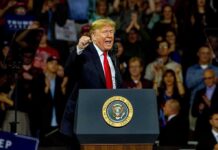
President Trump acknowledged a reality that cuts through the talking points: immigration enforcement at airports remains “fertile territory,” and ICE can arrest illegal entrants who surface in travel corridors. Trump also said that’s “not why they’re there,” insisting the purpose is help during travel disruptions. Conservatives will recognize the tension: a mission framed as operational support still carries enforcement authority, and that raises questions about clear limits, transparency, and how federal power is used in public spaces.
War-Time Security Concerns Don’t Solve a Staffing Crisis
Former TSA Administrator John Pistole offered a qualified defense: a conspicuous ICE presence could deter criminals and potential terrorists, especially amid heightened security concerns tied to the war in Iran. That argument is about deterrence and visibility, not throughput. Even if extra federal eyes help security posture, none of it fixes the underlying problem of TSA staffing stability—what caused mass callouts, whether policies or management failed, and whether travelers should expect repeated breakdowns during peak seasons.
For a conservative audience already weary of elite mismanagement—whether it’s inflation from spending, porous borders, or endless foreign entanglements—the airport episode lands as another example of government improvisation instead of competent administration. The immediate question is whether ICE support actually reduced disruptions, because evidence so far is mixed. The bigger question is constitutional and practical: when agencies are repurposed on short notice, Americans deserve clear rules, defined authorities, and results they can see.
Sources:
ICE agents are at airports to help TSA ease travel woes. Here’s what we know about their deployment