Tehran–Dubai flights are coming back even as missiles and drones still fly across the Gulf, raising hard questions about who this really helps – ordinary people or the same global elites who helped break the region in the first place.
Story Snapshot
- Iran’s Civil Aviation Authority says Tehran–Dubai flights restart July 1 after months of shutdown.[1]
- Iranian and United Arab Emirates aviation officials have issued permits and completed route approvals.[1]
- Flights will start with limited seats and may expand if security conditions improve.[4]
- The move follows a Swiss-brokered U.S.–Iran ceasefire framework, but both sides still trade fire and blame.[4][10]
Tehran–Dubai Flights Return Under A Cloud Of Conflict
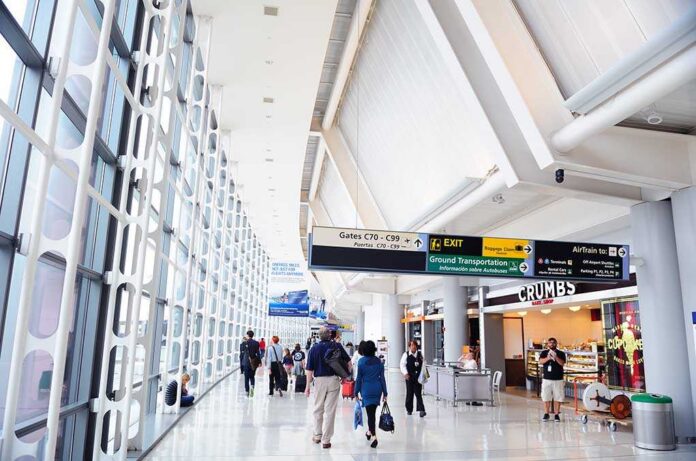
Iran’s Civil Aviation Authority announced that commercial flights between Tehran and Dubai will resume on July 1, reopening one of the country’s most important regional routes.[1] Iranian reports say civil aviation authorities in both Iran and the United Arab Emirates issued the needed permits for the restart, clearing the way for airlines to sell tickets again.[1][2] For now, only Iranian carriers will operate the route, with foreign airlines added later if regulators approve them.[1][15] This is being sold as a sign of “normalcy,” but the wider picture looks far from normal.
Aviation officials say all operational approvals are in place and that the Tehran–Dubai corridor is ready to reopen.[4] They describe a cautious plan: flights will begin at limited capacity and then grow as security improves.[4] Talks are also underway to restore links to Abu Dhabi and Sharjah, two more major hubs in the United Arab Emirates.[4] On paper, this sounds like simple travel news. In reality, it is a political message sent through airplane schedules, in a region where air routes often move before real peace does.
Ceasefire Framework Without Real Peace On The Ground
The flight restart comes after a ceasefire framework brokered in Switzerland that was meant to lower direct hostilities between the United States and Iran.[4] That framework helped reopen some key air routes and made this Tehran–Dubai move possible.[4] Yet Washington and Tehran still accuse each other of breaking the ceasefire, and recent weeks have seen reports of missiles, airstrikes, and maritime clashes around the Gulf.[4][10] Kuwait International Airport was even hit by drones and missiles linked to Iran, causing damage and injuries.[10] This is not what lasting peace looks like, and ordinary travelers are stuck in the middle.
Regional airspace also remains cut up and limited. Independent air-safety tracking notes that Iran’s main flight information region over Tehran has only partly reopened for overflights, while the western section stays closed.[12] Travel coverage explains that large parts of Middle East airspace are still shut and that countries like Kuwait and Bahrain remain completely inaccessible to normal flights.[13] Emirates airline says it will keep flying but is ready to change plans “quickly if it goes south,” a clear sign that big carriers do not believe the danger is gone.[11] This is aviation as a risk calculation, not aviation as proof of peace.
Who Benefits When Skies Reopen Amid Ongoing Tension?
Iran and the United Arab Emirates have a history of “low-key normalization” that often starts in areas like trade and aviation before politics catch up.[16][17] Trade between the two has grown over the years, even while embassies closed and the region slid into new wars.[18] The latest step fits that pattern: reopen flights, restart business, and hope investors and tourists come back. For many Americans who see globalist deals and deep-state maneuvering everywhere, this looks familiar. The planes move first, and regular people are told to trust that the danger is somehow under control.
At the same time, Iran and its rivals keep using drones, missiles, and proxy forces across the Gulf.[10][21] The United Arab Emirates has already been pulled into past fights between Iran, the United States, and Israel, becoming a target during earlier rounds of retaliation.[21] Now, even as airports in Kuwait and other areas face attacks, officials push a message of “normal” air traffic and resumed routes.[10][19] Critics across the political spectrum worry that regulators may be more focused on sending a political signal than on fully explaining the risks to travelers and workers who use these routes every day.
Aviation-Led “Normalization” And The Growing Public Distrust
Analysts note a broader pattern: commercial aviation is often the first sector to show signs of de-escalation in Middle East conflicts.[1] Governments reopen air routes and promote business ties before they resolve deeper issues like missile threats, proxy militias, or economic pressure.[16][17] That can help calm markets and please global corporations, but it does not guarantee that the violence is over. In this case, Tehran–Dubai flights may make headlines about “normalcy” while the ceasefire itself remains fragile and contested.[4][10] Many see this as another example of leaders trying to control the story rather than fix the core problems.
🇮🇷 Tehran-Dubai Flights to Resume Monday as Iran’s Skies Slowly Reopen
Commercial flights between Tehran and Dubai are set to resume Monday, Iranian state media reported, another step in the gradual reopening of Iranian airspace after the war.
The head of Tehran’s Imam Khomeini…
— Drop Site (@DropSiteNews) June 28, 2026
For Americans watching from afar, the stakes connect back to long-running frustrations. Conservatives see yet another global maneuver that ignores border security, energy stability, and the impact of endless foreign entanglements on working families at home. Liberals see a region where powerful states and corporations profit while the gap between rich and poor grows and minority communities face fresh risks. Both sides increasingly agree on one thing: the system looks rigged, whether it is airlines flying through half-closed war zones or governments promising “frameworks” that never seem to end the shooting.
Sources:
[1] Web – Tehran-Dubai flights are resuming Monday: Iran media
[2] Web – Iran to resume Tehran-Dubai flights from July 1 | Dunya News
[4] YouTube – Iran, UAE Take Step Toward Normalcy With Commercial …
[10] Web – TEHRAN-DUBAI FLIGHTS TO RESUME FROM JULY 1 – CGTN
[11] Web – Summary – Safe Airspace
[12] Web – 2026 Iran war | Deal, Explained, United States, Israel, Strait of …
[13] Web – There is a two-week ceasefire. Will airlines operate normally now?
[15] Web – What the US-Iran Ceasefire Means for Travel in the Middle East
[16] Web – Amid a fragile truce between the US and Iran, the aviation sector …
[17] Web – Latest Updates: ✔️The US and Iran have announced that they …
[18] Web – Iran war live: Supreme leader calls for war crimes charges on US …
[19] Web – Iran, UAE Move to Strengthen Aviation Cooperation – Caspian Post
[21] Web – The Consequences Of Arab Gulf States Normalizing With Iran …
© patriotspotlight.org 2026. All rights reserved.