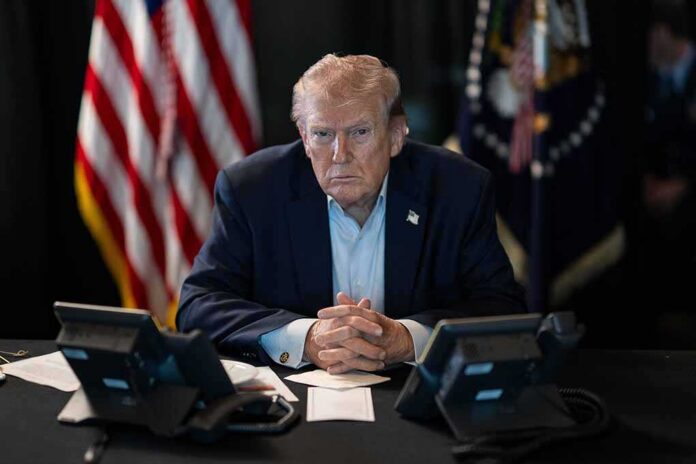
After weeks of backlash over government-funded TV spots praising him, President Trump says future “patriotic” ads will be paid by his super political action committee or by him — a swift shift that leaves big questions about how the first round was funded and whether rules were broken.
Story Highlights
- Trump says no more taxpayer money will fund his promotional TV ads.
- A White House official reportedly said MAGA Inc. will cover the ads going forward.
- Bipartisan critics say the original spots looked like campaign ads paid by the government.
- Democrats asked oversight agencies to probe possible anti-propaganda and ethics violations.
What Changed: From Taxpayer Funds To Political Committee
President Trump announced he will stop using taxpayer money for promotional television ads and instead rely on MAGA Inc., his aligned super political action committee, or personal funds. He made the shift after criticism from both parties that the first ads looked like campaign messages carrying a “Paid for by the U.S. Government” tag. A White House stance now points to private financing moving forward, signaling recognition that public funding sparked legal and ethical concerns among viewers and lawmakers.
Reporters and watchdogs say the early ad buys aired nationwide and praised Trump’s leadership and agenda as the midterms near. That timing led to a surge of questions about where the line sits between public service messaging and political promotion. Federal rules restrict government money from being used for “publicity or propaganda” aimed at persuasion rather than informing citizens about services. That gray area is often contested and decided after the fact by oversight bodies.
Why Critics Say The First Ads Crossed A Legal Line
Democrats and several Republicans argued the ads looked like campaign spots because they celebrated a leader, urged a national direction, and ran in prime sports broadcasts. Senate Majority Leader John Thune said the message might be fine, but not on the taxpayers’ dime. Legal experts cited rules against using appropriated funds for propaganda and limits on partisan activity by government employees. They said the content likely exceeded what public service announcements allow.
House Democrats asked the Government Accountability Office and the United States Office of Special Counsel to review the spending and the ads’ design. They said the spots may violate the long-standing ban on using taxpayer money for propaganda or partisan communications. That request seeks a judgment that could guide future administrations. It also aims to set a clearer limit on when government outreach turns into self-promotion paid by the public.
The Stakes For Trust, Oversight, And The Next Election Cycle
Many Americans on the right and left already doubt Washington’s honesty and priorities. Seeing government-branded praise ads deepened those doubts. Critics say public money should fund services and facts, not flattery. Supporters counter that presidents of both parties promote policies and national pride. The key test now is whether oversight offices rule that these ads broke rules or fit within a wide, if messy, tradition of aggressive public messaging by the executive branch.
🚨 BREAKING NEWS: Trump ends taxpayer funding for praise ads
Trump announced that taxpayers will no longer fund television advertisements that praise him. This decision follows criticism from ethics experts regarding three nationally broadcast ads. They called for independent… pic.twitter.com/2cDDaaHnrZ
— Globenews (@newsglobeorg) October 6, 2026
Trump’s promise to use private funds going forward may cool the spending fight, but it does not answer for what was already aired. If watchdogs find violations, agencies could face reimbursement demands or policy changes. If they do not, Congress may seek tighter language in funding bills. Either way, the episode shows how easily power can blur the line between informing citizens and boosting leaders — and why both sides increasingly see a federal system that serves insiders first.
Sources:
bbc.com, nbcnews.com, apnews.com, cnbc.com, wral.com, abc7.com, nytimes.com
© patriotspotlight.org 2026. All rights reserved.