
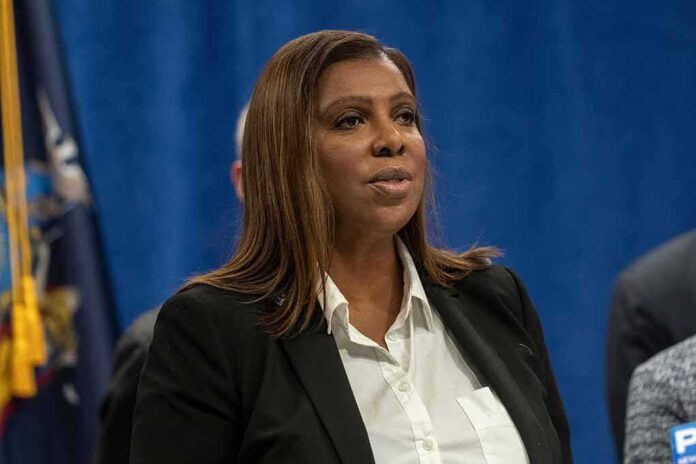
New York’s attorney general refused to address a past social post while pledging a “full and fair” probe into Cornell’s high-profile assault case, stoking fresh questions about neutrality that officials say the law may not require.
Story Snapshot
- Governor Kathy Hochul made Attorney General Letitia James special prosecutor in the Cornell case.
- James promised to “review the facts” and pursue charges only if warranted.
- A critic pressed James on whether she had affirmed the accuser’s claims in a prior Facebook post; she declined comment.
- Ethics experts say disqualification often needs an actual conflict, not just controversy.
What Changed: Special Prosecutor Takes Over Cornell Case
Governor Kathy Hochul signed an executive order appointing New York Attorney General Letitia James as special prosecutor in the investigation of alleged sexual assaults linked to Cornell University. The governor said new information raised serious questions about earlier handling by local authorities and the district attorney. James said her office is treating the matter as a criminal investigation and will act based on evidence. She framed the mission as restoring trust by following facts and the law.
James told reporters her team will review the facts, gather evidence, and interview witnesses, and, if warranted, seek prosecutions. Hochul added that James would examine the evidence and go wherever it leads. The appointment shifted control from the local process to the state attorney general’s office, after uproar over why the case closed without charges in 2024. Officials said the move aims to ensure a complete and credible review.
The Flashpoint: Impartiality Questions Surface
During press questioning, a critic challenged James’s impartiality, asking why she had affirmed the accuser’s allegations as fact before doing her own fact-finding. James declined to address the prompt, saying she would not comment on a Facebook post. The exchange sharpened a core concern among skeptics: that prior public comments by a prosecutor can shape public expectations and create an appearance problem, even if no formal conflict exists under law.
This friction is familiar in high-stakes cases. Prosecutors often speak to show victims they are heard and to steady public confidence. Yet those signals can be read as pre-judgment. Here, the new appointment was meant to fix trust issues in the original process. But it also exposed a new trust gap: whether the special prosecutor herself can be seen as neutral. James insists the review will be fair and evidence-driven, not political or personal.
What The Rules Say: Appearance Versus Actual Conflict
Professional standards stress that prosecutors must act without bias and honor the presumption of innocence. However, legal thresholds to remove or disqualify a prosecutor are narrow. Courts and rules in many jurisdictions generally require an “actual conflict of interest,” such as divided loyalties tied to personal interests or prior representation, not only public criticism or strong statements. Ethics scholars note that controversial remarks alone rarely meet that bar.
In practice, that means heated debate does not automatically force a recusal or removal. Advocates argue that the best check is process discipline: documented interviews, careful evidence handling, and clear charging decisions that show their work. If James’s office builds a transparent record, it can answer doubts with facts. If not, critics on both left and right will see this as more proof that elites protect their own, and that the system bends to politics rather than truth.
Why It Matters: Trust, Power, and The American Promise
Many Americans think the justice system favors the powerful and shames the powerless. Conservatives point to politicized prosecutions and lenient treatment for insiders. Liberals point to selective enforcement and a system that fails victims. This case cuts along both lines: a claim of a serious crime, questions about a closed file, and now a state takeover that invites new questions about fairness. Each step can either add trust or drain it, depending on what the evidence shows.
Letitia James appointed special prosecutor in alleged gang-rape at Cornell. New York attorney general brought in by governor after recent questions raised over university’s 2024 investigation #US https://t.co/P89AeBgigZ
— LawNewsIndex.com (@TheLawMap) October 3, 2026
The stakes are larger than Cornell. If James delivers a methodical, transparent probe, it can show the system still works when leaders correct course. If the process looks rushed or partisan, it feeds the belief that outcomes are decided first and justified later. For a country tired of excuses, the path forward is simple but hard: state the facts, test them, and let the public see the work. That is how confidence is earned back, one case at a time.
Sources:
nbcphiladelphia.com, reuters.com, abc7chicago.com, cbsnews.com, wdsu.com, nytimes.com, amny.com
© patriotspotlight.org 2026. All rights reserved.