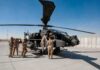

After more than a week of heavy U.S. bombing, President Trump now says these strikes will “end any chance” Iran ever gets a nuclear missile — but the facts on the ground tell a more complicated story.
Story Snapshot
- U.S. Central Command reports eight straight nights of strikes on Iran’s military sites, ports, and coastal defenses.
- Trump claims the campaign will stop Iran from ever fielding nuclear missiles, echoing past “obliterated” rhetoric about Iran’s nuclear program.
- Independent U.S. intelligence and arms control experts say earlier strikes only set Iran’s nuclear work back months to a couple of years, not forever.
- Decades of U.S.-Iran conflict suggest tactical success from airstrikes rarely leads to lasting security or clear victory.
Trump’s Latest Strikes And His Nuclear Missile Promise
U.S. Central Command says American forces have now hit Iranian targets for eight nights in a row, focusing on coastal surveillance, air defense systems, maritime assets, and missile and drone storage sites. Military briefings describe the goal as “degrading” Iran’s ability to attack ships and threaten traffic through the Strait of Hormuz, a vital route for world oil. After this latest wave, Trump told supporters that what the United States is doing will end any chance Iran ever gets a nuclear missile, framing the campaign as a final solution to a long-running threat.
Trump has used this kind of language before in the Iran war. When he launched “major combat operations” in February 2026, he said nuclear facilities at Fordow, Natanz, and Isfahan were “obliterated” and promised Iran would “never possess a nuclear weapon.” His administration also lists preventing Iranian nuclear armament and dismantling its ballistic missile forces as core war goals, even as it denies seeking open regime change. For many Americans watching, these bold promises sound like a clean victory in a messy region. But history and current intelligence reports suggest it is not that simple.
What Intelligence And Experts Say About Iran’s Nuclear Program
Early intelligence assessments after the first wave of strikes on Iran’s nuclear sites said the bombing did not destroy Iran’s ability to enrich uranium. A Defense Intelligence Agency review and satellite photos indicated the attacks set the program back only “a few months,” despite Trump’s claim that key facilities were “completely obliterated.” A later Pentagon assessment extended the setback to roughly one to two years, still far from the permanent end Trump describes. Arms control analysts add that Iran has had basic nuclear weapons capability since about 2007 and is likely to retain it after this war, even with serious damage to its infrastructure.
These experts also stress that bombing safeguarded nuclear facilities while talks were ongoing undermines global rules meant to stop the spread of nuclear weapons. They say the U.S. and Israeli strikes may slow Iran’s work but do not replace careful inspections, diplomacy, and clear agreements. Instead, attacking inspected sites risks pushing future programs deeper underground and farther from outside eyes. For citizens on both the right and left who already fear that Washington acts first and thinks later, this gap between confident promises and limited results fits a pattern they have seen before.
Long Pattern: Tactical Wins, No Clear Endgame
Researchers who track U.S.-Iran clashes over many years point to a repeating cycle. The United States and its allies often score decisive hits on Iranian forces, from sinking ships in the late 1980s to destroying missile launchers and nuclear buildings in the 2020s. Yet each round of strikes leads Iran to adjust—by relying more on proxy groups, hiding assets, or rebuilding damaged sites—with no stable peace or clear finish line. One analysis argues that the U.S. has “enjoyed tactical and operational successes” but has not turned them into lasting strategic gains or safer long-term relations.
This latest campaign fits that uneasy script. Trump’s own advisers acknowledge that Iran’s nuclear and missile programs did not pose an imminent, immediate threat to the U.S. homeland, even as they justified war in broad terms of preventing future danger. Senators and analysts warn that the strikes are a gamble without a clear endgame, saying there is no detailed plan for what comes after bombs and sanctions. That uncertainty feeds a growing feeling among many Americans that leaders launch dramatic actions overseas but fail to solve core problems at home or abroad.
Strait Of Hormuz, Regional Risks, And Public Frustration
The new strikes are also tied to the fight over the Strait of Hormuz. U.S. statements say recent missions aim to stop Iran from hitting commercial tankers and laying mines that could choke off global oil trade. Trump has even moved to reinstate a blockade on Iranian shipping and floated fees on foreign vessels for “safe passage,” expanding America’s direct control in the waterway. At the same time, Iranian forces are firing back at U.S. bases and Gulf state partners, spreading risk to allies and raising the chance of a wider regional war.
BREAKING NEWS ALERT: President Trump has announced that the Islamic Iranian terrorist regime was hit “very hard” after the US launched a ninth night of airstrikes on Sunday evening. The United States has vowed to “swiftly punish” the Islamic Iranian terrorist regime for U.S.… pic.twitter.com/cVo7s25Kqd
— Saint James Hartline (@JamesHartline) July 20, 2026
For older conservatives, this looks like another test of America First promises: strong strikes, higher energy stakes, and yet another costly foreign mission while borders and inflation at home still feel unstable. For older liberals, it can look like a repeat of past wars without clear limits, deepening the gap between elites and ordinary families who bear the costs. Both sides see a Washington that talks tough about ending threats “once and for all,” but expert reports show Iran’s nuclear and missile capabilities are dented, not erased. That gap between rhetoric and reality is exactly what fuels anger at a government many now view as serving its own power more than the people.
Sources:
facebook.com, centcom.mil, cnn.com, npr.org, reuters.com, washingtonpost.com, apnews.com, cbsnews.com, mesc.osu.edu
© patriotspotlight.org 2026. All rights reserved.