
After days of deadlock, a single juror forced a mistrial in the Lindsay Clancy case, and the public outrage now targets that person instead of the process that protects all of us.
Story Snapshot
- The judge declared a mistrial after an 11–1 split persisted for days.
- Juror interviews say most favored not guilty by reason of insanity; one did not agree.
- The defense sought the juror’s removal, but the judge refused.
- Legal experts note hung juries happen, and retrial is common.
What Triggered The Mistrial
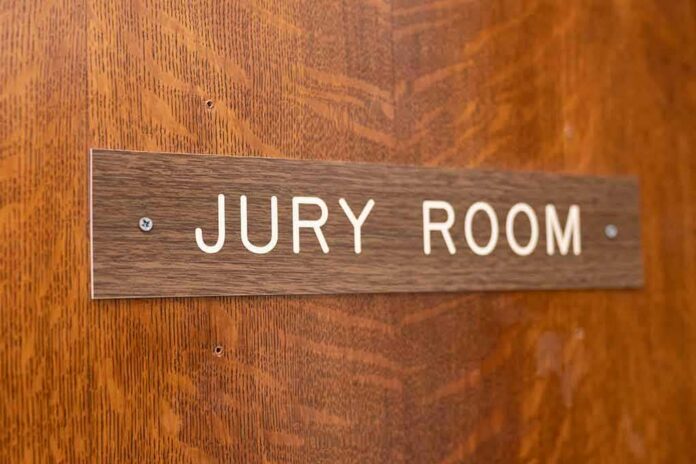
Massachusetts Superior Court Judge William Sullivan declared a mistrial after the jury said it could not reach a unanimous verdict. The panel deliberated for several days, reporting an 11–1 split that did not change. Court notes described one juror who did not agree with the others. The legal standard required all 12 to agree before a verdict could stand, so the court ended deliberations and declared a mistrial under standard practice for a deadlocked jury.
News outlets reported the divide as intense and emotional. Several jurors later said most favored a not-guilty-by-reason-of-insanity verdict, but one juror did not join them. Those jurors also described frustration in the room and said they believed the evidence supported insanity. Their account highlighted how one dissent can stop a verdict when the law demands unanimity. That is how the jury system works, even in painful cases with high public pressure.
The Fight Over The Holdout Juror
Defense attorney Kevin Reddington asked the judge to remove the holdout juror, citing a note from the foreperson that the juror would not follow the instructions on reasonable doubt. The judge declined to remove the juror. Removal during deliberations is rare and usually requires clear proof of misconduct or refusal to follow the law. Here, the court kept the panel intact until it ruled the jury was hopelessly deadlocked and ended the trial.
CNN reported that the defense later argued the juror had “acknowledging doubt” yet would not apply the law’s standard. That claim fueled calls to unmask and blame the holdout. But the judge’s refusal to remove the juror signaled the court did not find a firm basis for misconduct. Without a unanimous verdict in open court, the only lawful path was a mistrial. The system valued integrity of process over speed or public anger.
How The System Handles Deadlocks
Legal scholars point out that hung juries are part of the process, not a breakdown. Unanimity is meant to protect the accused and force the state to prove its case to every juror. When that fails, a mistrial follows, and prosecutors can usually try the case again. That is why this outcome is not the end of the legal road. It is a pause that preserves due process and allows a fresh jury to hear the case.
Public anger is now fixed on the holdout, a pattern seen in other high-profile trials. That focus can be dangerous. Jurors are ordinary citizens doing a hard civic duty under strict rules and heavy stress. When media and activists try to expose or punish them, trust in the system erodes. That fear chills honest dissent in the jury room and feeds the belief that elites or mobs decide outcomes, not facts and law—exactly what most Americans worry about today.
What It Means Beyond This Case
This case mixes grief, mental health, and law. Many people see a mother’s documented illness and demand mercy. Others see three dead children and demand punishment. The jury’s job was to apply the law on insanity and reasonable doubt, not to satisfy a crowd. The mistrial shows the system resisted the rush to a verdict. That restraint is not a win for any faction; it is a guardrail meant to serve all of us when the stakes are highest.
Key Questions To Watch Next
Prosecutors must decide whether to retry the case and how to present complex medical evidence again. The defense will refine its insanity arguments for a new panel. The court will weigh how to seat jurors who can set aside the uproar. The public will choose whether to protect juror privacy and the rule of law, or to keep hunting for a villain. The answer will signal whether our institutions still put fairness ahead of fury.
Sources:
townhall.com, npr.org, nbcchicago.com, abcnews.com, hls.harvard.edu
© patriotspotlight.org 2026. All rights reserved.