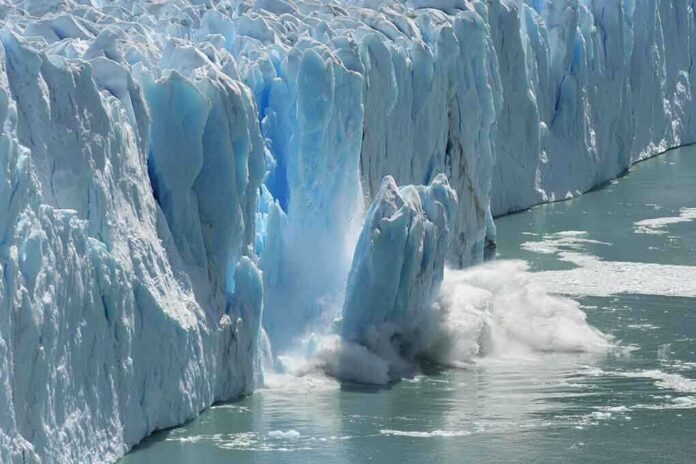
A stealthy swarm of robots is heading into Greenland’s dangerous ice to answer a simple but pressing question: how fast is the ice that helps steady our climate really falling apart.
Story Snapshot
- Robots, subs, and drones will map Greenland’s melting ice where glaciers meet the sea, one of the least understood but most important places for future sea level.
- Data from this mission will feed climate models that try to predict when ocean currents and sea level could cross dangerous tipping points.
- Scientists say only detailed, on-the-ground measurements can show if Greenland’s ice loss is slowing for a moment or hiding a bigger long-term problem.
- The project reflects a wider trend: using robot swarms in risky, remote zones while many Americans wonder if leaders are truly focused on real-world threats.
Robot swarm heads into Greenland’s danger zone
This summer, scientists will send a fleet of submarines, robots, drones, and sensors from the Royal Research Ship Sir David Attenborough to Greenland’s coast. Their main target is the chaotic zone where huge glaciers meet the ocean, crack, and break apart. These edges are dangerous for people and regular ships, so robots will go in instead. The goal is to study melting ice in “never-before-seen” detail and finally map how these hidden areas are changing.
A special robotic boat will move along the surface, dodging icebergs while it scans nearby glaciers with sonar. This sonar can track how fast the ice face is shrinking over time. Smaller sea robots, only a few meters long, will dive hundreds of meters deep to measure melt under the water line. One slim underwater vehicle will even be lowered through a drilled hole in the ice to explore the underside of the ice sheet itself, a place humans cannot safely reach.
Why this mission matters for sea level and ocean currents
Greenland’s ice sheet holds enough frozen water to raise global sea level by several meters if it melted. Between 1992 and 2020, Greenland and Antarctica together added about 21 millimeters to average sea level, and the rate of ice loss rose over time. Satellite missions such as the Gravity Recovery and Climate Experiment Follow-on can track total ice mass, but they cannot see all the fine details at the glacier front. That is why researchers want robots close to the action.
Recent data show the Greenland ice sheet lost about 55 billion tons of mass in 2024, the lowest loss in more than a decade, thanks to more snowfall and cooler summer weather. That sounds like good news, but scientists warn it may be a short pause in a longer trend. They need to know how much melt is happening at the glacier-ocean boundary, where warm water eats away at ice from below. Robotic sensors screwed into ice cliffs 50 to 100 meters below the surface will track temperature, turbulence, and melt rates in real time.
Robot swarms as a new tool in hard-to-reach places
Teams in the United States and Europe are betting that swarms of robots will change how we study ice and climate. Researchers at Oregon State University are building a “mothership” robot that can carry and deploy many smaller robots under ice shelves. These passenger robots will spread out under the ice, measure water properties, and send data back to the parent robot. A West Virginia University engineer describes a similar vision: ten to one hundred marine robots working as a coordinated network inside ice shelf cavities.
These swarms aim to sample places that are too risky or tight for people or large subs to enter. The data could reveal how quickly ice shelves are thinning and how stable nearby glaciers really are. British Antarctic Survey scientists are already mixing marine robots, drones, and satellites to map Greenland’s changing ice and feed improved computer models. Those models are used around the world to predict future sea level and to test what happens under different warming and policy choices.
Promise, limits, and the bigger question of priorities
Many new tools in climate science are first sold as “game changers” but take years to prove their worth. Past projects using satellites or new types of radar needed time before they beat existing methods. Swarm robotics faces its own hurdles. Robots must survive extreme cold, avoid collisions, and keep talking to each other deep under ice. A study of robot swarms shows they adapt better with careful limits on how they communicate, which is tricky to design in real oceans.
For everyday Americans, the mission raises a broader issue. On one hand, this robot swarm could give clearer warnings about rising seas and shifting ocean currents that may hit coastal towns, energy prices, and food supply. On the other hand, many feel the federal government and global institutions focus on big tech projects while ignoring the daily struggle to afford housing, energy, and food. The key test will be whether this high-tech ice mission leads to actions that protect people, not just more reports and press releases.
Sources:
sciencenews.org, media.statler.wvu.edu, news.oregonstate.edu, essd.copernicus.org, svs.gsfc.nasa.gov, bas.ac.uk, science.org
© patriotspotlight.org 2026. All rights reserved.