
Cuba just opened fire on a Florida-registered speedboat near its shoreline—killing four Americans on board—and Washington still hasn’t publicly answered the biggest question: why was that boat there?
Story Snapshot
- Cuban authorities say their Border Guard engaged a Florida-registered speedboat (FL7726SH) inside Cuban territorial waters near Cayo Falcones on Feb. 25, 2026.
- Cuba claims the U.S.-registered boat fired first when guards approached to identify it, triggering an exchange of gunfire.
- Four passengers on the speedboat were killed and seven people were injured, including six passengers and one Cuban commander, according to Cuba’s Interior Ministry.
- Names, motive, and the purpose of the trip have not been disclosed; Cuba says an investigation is ongoing and U.S. officials had not publicly confirmed details in the reports available.
What Cuba Says Happened in Its Territorial Waters
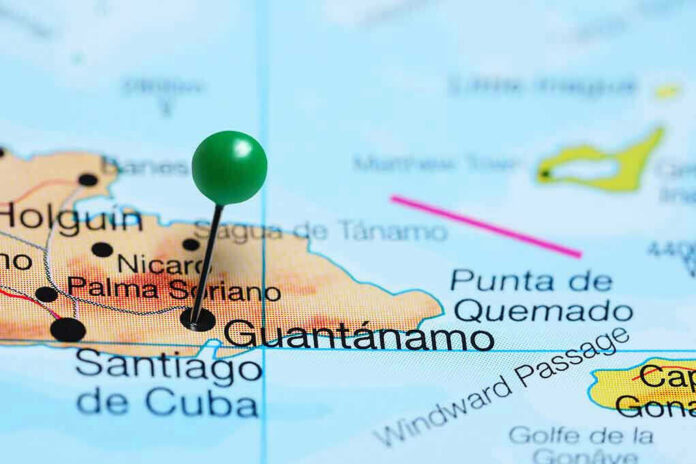
Cuba’s Interior Ministry reported that Border Guard Troops detected a Florida-registered speedboat in Cuban territorial waters near Cayo Falcones, in Villa Clara province, on the morning of Feb. 25. The boat was located about one nautical mile northeast of the El Pino channel, according to the same account. Cuban authorities said a five-member border guard unit approached to identify the vessel, then came under fire from the speedboat.
Cuba’s version of events says the exchange of gunfire left four passengers aboard the U.S. speedboat dead and seven people injured. The injured reportedly include six passengers and one Cuban commander. Cuban statements said the wounded were evacuated for medical care and that a formal investigation is underway. No identities were released, and Cuba did not publicly provide a motive for why the boat entered Cuban waters.
BREAKING: Cuba’s coastguard shot dead four people and injured six others travelling in a US-registered speedboat in an exchange of fire off the Cuban coast, the interior ministry in Havana said on Wednesday.https://t.co/IrWZEGxkZy
— Insider Paper (@TheInsiderPaper) February 25, 2026
What’s Confirmed, What’s Not, and Why That Matters
Multiple outlets repeated the same basic details—location near Villa Clara, four deaths, and the Cuban Interior Ministry’s account that the speedboat fired first—but key facts remain unverified outside Cuban statements. The incident took place in Cuban territorial waters, not international waters, which legally strengthens Havana’s claim of enforcement authority even as it raises serious concerns about proportional force and rules of engagement. No U.S. on-the-record narrative was reflected in the available reporting.
The lack of names and purpose is not a small detail. Florida-registered speedboats in the region can be used for legitimate travel, but they are also frequently associated with smuggling or illegal migration routes between Florida and Cuba. The research provided does not confirm who was on FL7726SH or why it was near Cayo Falcones. Until those facts are established, responsible analysis has to separate what Cuba alleges from what can be independently corroborated.
A Volatile Maritime Moment for the Region
This clash lands amid heightened maritime tension across the Caribbean. Separate reporting cited in the research describes U.S. “Operation Southern Spear,” launched in late 2025, involving dozens of strikes on suspected trafficking vessels and significant controversy abroad over civilian harm and accountability. That context does not prove any connection to the Cuba incident, but it helps explain why misunderstandings, enforcement decisions, and armed encounters at sea are becoming more frequent—and more politically combustible.
What U.S. Officials and Families Will Demand Next
The next steps are straightforward but urgent: verification, identification, and jurisdictional clarity. Families of the dead and injured will want names released, medical access for survivors, and a clear account of who fired first. U.S. officials will also need to determine whether this was a botched migrant run, a criminal venture, or something else entirely. Without those facts, political actors on all sides can spin the event into propaganda—while the truth stays buried.
For Americans who watched years of border chaos and selective enforcement under the prior administration, the lesson is familiar: when governments fail to control borders and trafficking routes, ordinary people end up in dangerous gray zones—at sea, in courts, and in morgues. This incident also underscores why constitutional governance and clear national sovereignty matter. The U.S. should press for transparent facts while avoiding speculation until the boat’s mission, passengers, and timeline are conclusively established.
Sources:
Armed confrontation in Cuban waters leaves four dead and seven injured
Four passengers of US speedboat shot dead by Cuban coast guard: interior ministry – AFP
Rubio Dodges Accountability at Senate Hearing as Deadly Boat Strikes Continue
United States strikes on alleged drug traffickers during Operation Southern Spear