
A senior Russian general was assassinated in a devastating car bomb attack in the heart of Moscow, marking the third such targeted killing of military leadership in 2025 and exposing critical security failures within Putin’s regime.
Story Highlights
- Lieutenant General Fanil Sarvarov killed by explosive device planted under his car in Moscow parking lot
- Third car bombing targeting Russian military officials in 2025, indicating escalating assassination campaign
- Attack occurred during weekend peace negotiations between Ukraine and United States
- Russian investigators examining Ukrainian intelligence involvement in the operation
High-Ranking Military Official Targeted in Moscow Attack
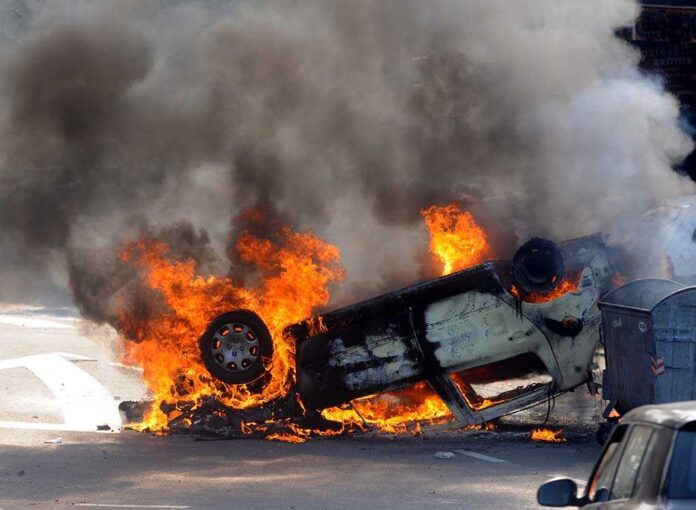
Lieutenant General Fanil Sarvarov, head of the Operational Training Department of the General Staff of the Russian Armed Forces, died from injuries sustained in a car bombing on Yaseneva Street in Moscow. The explosive device detonated beneath his vehicle around 7:00 a.m. Moscow time on December 22, 2025, while parked in a parking lot. Russian media described the explosion as particularly ferocious, with visible wreckage demonstrating the destructive force of the bomb.
The Russian Investigative Committee confirmed Sarvarov’s death and identified the method as a car bomb attack. Officials stated they are examining whether Ukrainian intelligence services organized the assassination as part of broader conflict strategy. The Pentagon has been briefed on the incident, though Ukraine has not commented on or claimed responsibility for the bombing.
Escalating Pattern of Targeted Assassinations
This bombing represents the third attack of its kind in 2025 alone, utilizing car bombs to target military officials and high-profile individuals. Ukraine has demonstrated capability and willingness to conduct similar operations, with documented involvement in comparable car bombing attacks approximately one year prior. The consistency of methodology and target selection suggests coordinated operations rather than isolated incidents.
Moscow has increasingly become a dangerous location for Russia’s elite, including both military and business leadership. The city’s security environment has deteriorated significantly, with multiple high-profile attacks occurring throughout 2025. This reflects broader instability within Russian power structures and demonstrates the effectiveness of operations targeting the Russian establishment despite presumed security measures.
Diplomatic Implications During Peace Negotiations
The timing of this assassination is particularly significant as it coincides with weekend peace talks between Ukrainian and U.S. representatives. These negotiations represent a critical juncture in the ongoing conflict, making the elimination of a senior Russian military official especially consequential for diplomatic efforts. The attack demonstrates that despite diplomatic engagement, military operations continue unabated, complicating efforts to establish sustainable peace agreements.
The incident may influence the trajectory of peace negotiations and Russian willingness to engage diplomatically. It reinforces asymmetric warfare dynamics, with targeted assassination tactics employed against Russian military hierarchy potentially designed to influence diplomatic outcomes through military pressure. This undermines traditional diplomatic protocols and demonstrates the vulnerability of even high-ranking officials in Russia’s capital city.
Sources: