As Iran blasts out dramatic launch videos to project strength, the real battle is over who controls the truth about what those missiles and drones actually hit—and what that means for American forces and global stability.
Story Snapshot
- Iran’s Revolutionary Guard released slick footage of missile and drone launches it claims struck United States bases in Kuwait and Bahrain.
- United States Central Command says most missiles failed en route and air defenses shot down multiple drones before they could hit American assets.
- Kuwait confirms its main airport was damaged, at least one person killed, and several wounded in the Iranian attack.
- The propaganda war over “success” highlights growing threats to American forces, global energy routes, and regional stability.
Iran’s Launch Video: Power Display or Propaganda Tool?
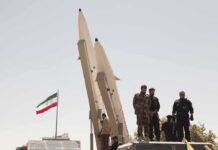
Iran’s Revolutionary Guard released polished footage showing missiles and drones roaring off launchers toward what it claims are United States bases in Kuwait and Bahrain, framing the operation as a forceful retaliation and proof of growing military muscle.[2][3][5] The video captures night launches and projectiles in flight, crafted to signal resolve to both domestic and foreign audiences.[1][2] Iranian officials portray the attack as a successful strike on United States military facilities and the United States Fifth Fleet headquarters in the Gulf.[3][5]
According to Iran’s Revolutionary Guards, the barrage targeted United States forces in response to earlier American strikes on an Iranian communications site near Qeshm Island and actions against an Iranian-linked tanker near the Strait of Hormuz.[2][5] Iranian media further claim missiles and drones went after the United States Fifth Fleet headquarters, an airbase, helicopters, and even a vessel identified as Panaya.[5] For Tehran’s leadership, publicizing launch footage is central to selling the narrative that Iran can hit back hard whenever Washington uses force.[2][3][5]
United States and Allies Say Most Missiles Failed or Were Intercepted
United States Central Command offers a sharply different account, stating that missiles aimed at Bahrain were intercepted by United States and Bahraini air defenses while those fired toward Kuwait “failed en route” and did not reach their intended military targets.[1][2] United States officials say air defenses in the region “successfully downed multiple drones” and ensured no American personnel or assets were harmed in Kuwait.[1] Washington flatly rejects Iranian claims of successful strikes on United States forces, insisting all attacks on American positions failed.[1][3]
United States forces did not remain passive after the launches. Central Command reports that American forces carried out what it called self-defense strikes against an Iranian military ground-control facility on Qeshm Island that supported the drone activity.[1][2] United States media further describe another round of defensive operations in which the United States military shot down multiple incoming Iranian drones and struck a drone ground-control station in southern Iran while emphasizing that no additional civilian or military targets were hit.[6] These responses are framed as limited, targeted actions designed to protect American troops while trying to avoid a wider regional war.[1][2][6]
Collateral Damage in Kuwait and Rising Risk to Global Commerce
While the United States reports no damage to its own personnel or facilities, Kuwait confirms that its territory did not escape unscathed. Kuwait’s defense and foreign ministries say Iranian drones damaged Kuwait International Airport, forcing a shutdown of commercial flights, injuring several people, and leaving at least one person dead.[1][5] Officials describe hostile drones striking the passenger building, causing significant structural damage and disruption to normal operations at the country’s primary gateway.[1] The attack also reportedly damaged unnamed diplomatic missions in Kuwait.[5]
🇮🇷🇰🇼 Iran's attack damages Terminal 1 at Kuwait International Airport
Videos and photos are circulating on social media showing significant damage to Terminal 1 at Kuwait International Airport. The damage was caused by Iran's drone and missile attack last night.
The extent of… https://t.co/rvsecAAD3D pic.twitter.com/4JuQ6Alnfx
— Barong (@Barong369) June 3, 2026
Regional reporting notes that Iranian missile and drone strikes across Gulf countries have injured dozens and killed at least four people in total, largely grounding flights and throttling commerce in multiple states.[4][5] The Strait of Hormuz, one of the world’s most critical energy chokepoints, remains heavily constrained for commercial shipping as the standoff continues.[5] For American readers who remember years of talk about “energy independence,” this confrontation is a reminder that instability driven by hostile regimes still threatens fuel prices, supply chains, and the broader global economy.[4][5]
Information War: Launch Footage vs. Battlefield Reality
The clash over what “really” happened fits a broader pattern in modern missile and drone warfare: launch footage is released quickly, while independent proof of actual impact, military damage, or effectiveness arrives slowly, if at all.[1][2][3] Iran’s video is strong evidence that launches occurred, but it is not proof that its weapons achieved their intended military effects against United States forces.[2][3] Meanwhile, United States and partner claims about successful interceptions and missile failures must be judged alongside confirmed civilian damage in Kuwait.[1][5]
For constitution-minded Americans wary of foreign entanglements and propaganda, the lesson is twofold. First, authoritarian regimes like Iran’s will use every missile launch as a stage show to project power and challenge American presence in strategic regions.[2][3][5] Second, the United States government must balance defending deployed troops and vital sea lanes with a clear-eyed communication strategy that respects the public’s right to know what is truly happening—without inflating threats or downplaying risks to our allies and global commerce.[1][2][4][5][6]
Sources:
[1] Web – Iranian Military Releases Video of Missile and Drone Launches
[2] YouTube – Iran releases video of apparent U.S. drone wreck as …
[3] YouTube – Iran launches wave of drones at US forces in Kuwait …
[4] YouTube – US, Iran Trade Missile and Drone Blows as Kuwait …
[5] YouTube – Watch: Israel Releases Footage of Iranian Drone, Missile …
[6] YouTube – Videos show Iran’s drone army puncturing U.S. and allied …
© patriotspotlight.org 2026. All rights reserved.