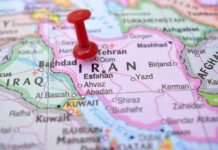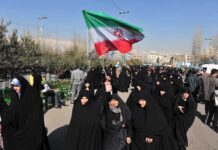
The Pentagon’s “more troops to Iran” means that there is a widening Middle East surge tied to an open-ended strike campaign the administration won’t put a clock on.
Story Snapshot
- Pentagon leaders confirmed additional U.S. forces are deploying to the Middle East as Operation Epic Fury expands against Iran.
- Officials said there are no U.S. ground troops inside Iran right now, but they refused to rule out future ground involvement.
- Four U.S. service members were killed after an Iranian missile penetrated defenses at a tactical operations center, and Pentagon leaders warned more losses are possible.
- The operation began Feb. 28 with large-scale air, naval, cyber, and space actions targeting more than 1,000 Iranian sites in the first 24 hours.
What the Pentagon Confirmed About New Deployments
Pentagon officials told reporters on March 2 that additional U.S. troops and capabilities are moving into the Middle East to support Operation Epic Fury, the Trump-ordered campaign against Iran that began Feb. 28. Defense Secretary Pete Hegseth and Joint Chiefs Chairman Gen. Dan Caine framed the move as reinforcing CENTCOM’s ability to sustain strikes and protect U.S. personnel and interests. The Pentagon did not provide a public end date for the operation.
Officials also drew a bright line—at least for now—between deploying forces into the region and placing American ground troops inside Iran. Hegseth said there are no “boots on the ground” in Iran at present, but he declined to close the door on future options. That ambiguity is deliberate in wartime planning, but it also creates a political reality at home: Americans are being asked to accept risk without clear public benchmarks for victory.
How Operation Epic Fury Escalated in the First 72 Hours
The Pentagon described the opening phase as a synchronized campaign using more than 100 aircraft, Tomahawk missiles, cyber disruptions, and space-enabled operations, with more than 1,000 Iranian targets hit in the first day. The target set emphasized missile systems, production sites, naval capabilities, and air defenses—assets tied to Iran’s ability to threaten U.S. forces, allies, and shipping routes. Officials described it as major combat operations, not a single retaliatory strike.
Early March 1 brought the sobering cost that often gets buried beneath maps and acronyms: four U.S. service members were killed when an Iranian missile penetrated defenses and struck a tactical operations center. Pentagon leaders said Americans should expect additional losses as the operation continues. Iranian casualty totals reported publicly reached into the hundreds, though the U.S. briefings emphasized mission objectives—degrading Iran’s capacity to project power—rather than casualty counting as a measure of success.
“No Timeline” Meets War Powers Reality Back Home
One of the most important domestic angles isn’t partisan; it’s constitutional. The operation was reported as being conducted with Congress notified under the War Powers Resolution framework, which sets a 60-day clock for unauthorized hostilities absent congressional approval. That legal architecture matters because open-ended combat operations can quickly outrun public understanding and oversight, especially when officials avoid specifics on troop numbers, basing, or the campaign’s termination conditions.
What’s Known—and Still Unclear—About End Goals
Pentagon leaders publicly rejected “regime change” as the stated goal, describing the mission instead as destroying capabilities that enable Iranian threats and nuclear ambitions. At the same time, officials used language suggesting the campaign is not nearing completion, with Caine indicating the fight will take time and Hegseth defending expansion while pushing back on “endless war” labels. That combination—no regime-change objective, but no timeline—leaves the public with limited clarity on what “done” looks like.
The Pentagon Says More Troops Are Being Deployed to Iran
https://t.co/noSmJRwDr7— Townhall Updates (@TownhallUpdates) March 2, 2026
Limited public detail also fuels confusion in everyday conversation, especially in headlines that imply troops are deploying “to Iran.” Based on the briefings, the confirmed movement is into the Middle East theater, not onto Iranian soil. The difference is not semantic: deploying to the region expands U.S. striking power and force protection, while deploying into Iran would represent a new phase with major strategic and human consequences. For now, the Pentagon’s firmest claim is what has not happened yet.
Sources:
Death Toll for US Service Members in Iran War at 4 as Hegseth Refuses to Specify Timeline
Hegseth doesn’t rule out U.S. troops in Iran
‘Just the Beginning,’ ‘Not Endless War’: Hegseth Defends Expanding Iran Combat
US surges forces to Middle East; Pentagon warns Iran fight will take some time
Additional troops to deploy to Middle East as Gen. Caine says to expect additional losses
Prelude to the 2026 Iran conflict