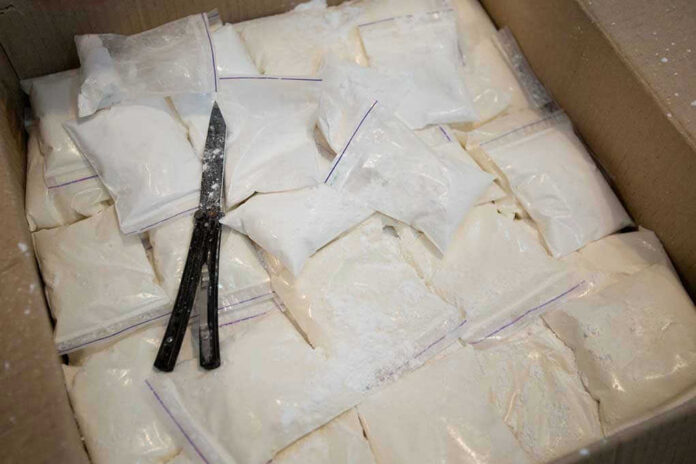
Spain’s recent crackdown on cocaine smuggling highlights innovative criminal tactics and raises concerns about maritime safety.
Story Highlights
- Spanish authorities dismantled a cocaine smuggling ring using swimmers for high-seas assaults.
- The operation resulted in 30 arrests and seizures of over 2.4 tonnes of cocaine.
- International cooperation played a critical role in the operation’s success.
- Concerns grow over the evolving methods of drug cartels threatening maritime safety.
Smugglers Employ Swimmers for High-Seas Assaults
In a brazen display of ingenuity, criminal organizations have resorted to using young swimmers to attach cocaine packages to container ships at sea. This method, known as the “micos” tactic, involves intercepting vessels near the Strait of Gibraltar and using military-style procedures for drug extraction. The operation, which dismantled three interconnected criminal groups, highlights the lengths to which cartels will go to exploit maritime routes.The criminal network involved Balkan Cartel-linked owners, Colombian nationals operating in Colombia and Spain, and a group based in Campo de Gibraltar. Their logistics included boats and swimmers to facilitate the cocaine’s journey from South America to Europe. The cartel’s utilization of impoverished swimmers for these dangerous tasks underscores their ruthless tactics and disregard for human life.
Law Enforcement and International Cooperation
Spanish authorities, including the Guardia Civil, Policia Nacional, and the Spanish Tax Agency, played pivotal roles in the operation. Their efforts were bolstered by international cooperation, with support from the U.S. DEA, UK NCA, and law enforcement agencies from Brazil, France, and Portugal. This collaboration underscores the necessity of global partnerships in addressing the transnational threat of drug trafficking.
In another major operation dubbed “White Tide,” nearly 10 tonnes of cocaine were seized from a Cameroon-flagged ship. This operation, marking the largest-ever maritime cocaine seizure, further highlights the effectiveness of international cooperation in combating drug cartels. The street value of the seized cocaine is estimated to be around €400 million, dealing a significant financial blow to the criminals.
Impact and Future Implications
The immediate impact of these operations is a disruption in cocaine flow into Europe, with over 2.4 tonnes seized from the swimmers ring alone. Such seizures highlight the need for heightened vigilance at ports and sea routes. However, experts warn that Spain’s geographic position as a gateway to Europe may lead cartels to adapt by shifting their tactics, potentially using more dangerous methods or alternative routes.
Spain nabs cocaine ring that used swimmers on high seas.
— CGTN Africa (@cgtnafrica) January 15, 2026
In the long term, these operations are expected to weaken the influence of Colombian-Balkan-Spanish criminal networks. By seizing assets worth over €5 million, including crypto wallets, and arresting key operatives, law enforcement has struck a significant blow against these organizations. While this serves as a victory for anti-drug efforts, the adaptability of cartels remains a concern, necessitating ongoing vigilance and international cooperation.
Sources:
Spain’s largest-ever cocaine seizure at sea: Operation “White Tide”
Spain seizes nearly 10 tonnes of cocaine in largest maritime bust
Spain seizes 10 tonnes of cocaine in largest-ever maritime bust