When the world reduces Nigeria’s bloodshed to a one-line “religious war” narrative, the victims—Christians and Muslims alike—get buried under politics instead of helped with security and real relief.
Story Snapshot
- Reports of over 160 worshippers abducted during Sunday services in Kaduna State underscore how mass-casualty violence is spreading beyond one region.
- U.S. airstrikes on Christmas Day 2025 targeted Islamist militants in northern Nigeria after claims of escalating attacks on Christians.
- UN officials argue the crisis is wider than sectarian conflict, driven by insurgency, banditry, land clashes, and state fragility.
- Humanitarian conditions are deteriorating as funding drops sharply, even while displacement and food insecurity remain severe.
Mass Abductions and Massacres Keep Nigeria on Edge
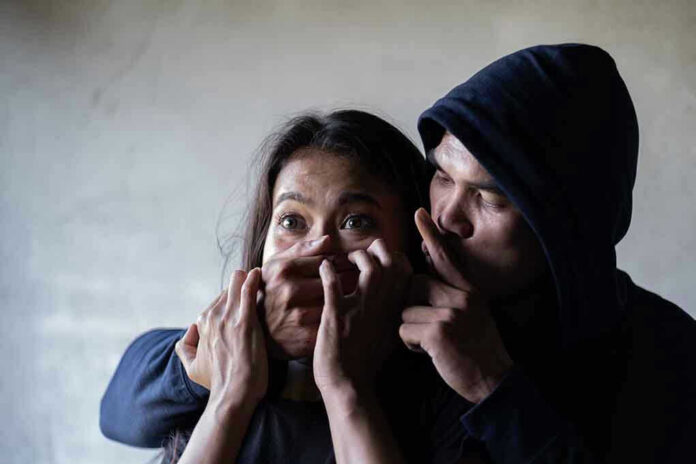
January 2026 brought fresh evidence of Nigeria’s security collapse as more than 160 worshippers were abducted during Sunday services in Kaduna State, according to UN reporting. The same UN account described additional attacks in the northwest that killed dozens and reported students targeted near a Catholic school in Papiri. These incidents fit a pattern of mass kidnappings and assaults that terrorize families, disrupt church and community life, and overwhelm local authorities.
December 2025 also saw violence strike civilians during the Christmas period. UN reporting described an attack on a mosque and market area in Maiduguri on Christmas Eve that killed Muslim worshippers. The proximity of attacks on both churches and mosques highlights why many Nigerians reject simplistic talking points about “one side” being the only target. The practical reality for ordinary people is that armed groups can hit soft targets—worship services, markets, schools—with little warning.
What U.S. Strikes Changed—and What They Didn’t
On Christmas Day 2025, the United States carried out airstrikes against Islamist militants in northern Nigeria, citing the need to protect Christians facing violence. The action reignited international claims of a “Christian genocide” and intensified debate about whether the conflict is primarily religious persecution or a broader state-security breakdown. Airstrikes can disrupt specific networks, but the UN’s field assessment indicates the overall threat environment involves multiple armed actors across several regions.
UN humanitarian officials have pushed back on the genocide framing by emphasizing that large numbers of those killed over the course of the insurgency have been Muslims, including people attacked while worshipping in mosques. The UN position is that violence often falls on communities “without distinction of religion or ethnicity.” From a policy standpoint, that assessment matters: if the problem is treated as only sectarian, Nigeria’s leaders and international partners can miss the criminal and governance drivers enabling mass murder and kidnapping.
A Countrywide Security Breakdown, Not a Single Conflict
Nigeria’s crisis has expanded beyond the northeast insurgency most Americans remember from Boko Haram headlines. UN reporting describes a patchwork of threats: jihadist violence in the northeast, “banditry” and mass kidnapping in the northwest, and climate-pressured farmer-herder conflicts in the central belt. Separatist tensions and oil-related violence in the south add another layer. This fragmentation strains any centralized response, because what works against insurgents may not work against profit-driven kidnappers.
For Americans watching from afar, the big takeaway is that religious identity still matters, because churches and Christian villages can be targeted and because faith shapes community resilience. But the UN’s figures and descriptions caution against pretending the conflict is one-dimensional. When government authority weakens, armed groups exploit the vacuum. Families pay in the most personal ways—children pulled from schools, worship services disrupted, farmers driven off land, and entire communities forced into displacement camps.
The Humanitarian Emergency Is Growing as Funding Shrinks
The humanitarian scale is staggering. UN reporting puts Nigeria’s internally displaced population at roughly 3.5 million, with around 2 million in the northeast alone. The same reporting says 7.2 million people in the northeastern states require assistance, with 6 million in severe or critical condition. Food insecurity is widespread, and children face heightened malnutrition risks. Disease outbreaks, including cholera and meningitis, compound suffering in camps and remote areas with limited medical access.
At the same time, UN officials report that humanitarian funding has plunged—from nearly $1 billion annually in prior years to $262 million in 2025, with projections below $200 million for 2026. That shortfall means fewer protected spaces for displaced families, less medical coverage, and less food assistance while insecurity continues. For a conservative audience wary of waste, the funding collapse also raises a hard question: how much of global aid is truly reaching high-need zones versus getting lost in bureaucracy and headline-driven priorities?
Nigeria’s situation also illustrates a recurring problem in international coverage: slogans replace facts, and citizens end up misinformed about what would actually reduce violence. The UN account stresses complexity—insurgency, criminality, and climate stress—while acknowledging religious communities are harmed. The most defensible conclusion from the available reporting is that protecting Christians remains urgent, but durable security requires confronting the wider collapse in safety, accountability, and basic governance that allows mass atrocities to repeat.
Sources:
Violence roiling Nigeria extends beyond religious lines, amid a deepening humanitarian crisis