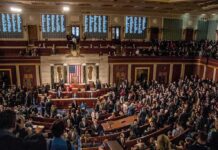


Trump has transformed the federal government shutdown from a budget crisis into a calculated weapon for restructuring the federal workforce while maximizing political pressure on Democrats.
Story Highlights
- 900,000 federal employees furloughed while 700,000 work without pay as shutdown enters day two
- Trump administration directs agencies to prepare mass layoffs targeting programs not aligned with presidential priorities
- Shutdown began October 1st after Senate rejected both Republican and Democratic funding proposals
- Essential services continue while NIH, CDC, and WIC programs face operational suspensions
Strategic Shutdown Transforms Into Workforce Restructuring Tool
The Trump administration has weaponized the government shutdown beyond traditional budget negotiations. The Office of Management and Budget issued directives for agencies to prepare extensive employee layoffs through Reduction in Force notices, specifically targeting unfunded programs that don’t align with administration priorities. This represents a departure from typical shutdown procedures, where the focus remains on restoring operations rather than permanent workforce reduction.
The timing proves deliberate. Rather than pursuing immediate resolution, Trump canceled initial meetings with Democratic leadership and posted satirical social media content mocking Democratic leaders hours after negotiations failed. This calculated approach suggests the administration views the shutdown as an opportunity rather than an obstacle, using the crisis to advance long-term restructuring goals.
Democrats Face Maximum Political Pressure Campaign
Trump’s strategy deliberately amplifies pain points for Democratic constituencies. The shutdown particularly impacts programs championed by Democrats, including the Women, Infants, and Children nutrition program, National Institutes of Health research, and Centers for Disease Control operations. By maintaining essential services like Medicare and Transportation Security Administration while suspending Democratic priorities, the administration creates targeted political pressure.
Congressional dynamics reveal the depth of this strategy. The Senate rejected the Republican continuing resolution despite majority support because Democrats denied the 60 votes needed to overcome filibuster rules. Trump’s team calculated that forcing Democrats to block funding would shift blame while providing cover for workforce restructuring through extended shutdown duration.
Federal Workforce Bears Unprecedented Burden
The human cost reaches staggering proportions with 1.6 million federal employees affected across the spectrum. Unlike previous shutdowns focused on restoration, this approach encourages permanent workforce reductions. Agencies received clear guidance to consider which positions align with administration priorities, effectively conducting job evaluations during the crisis rather than preparation for resumed operations.
Historical precedent suggests extended duration. Trump’s previous shutdown lasted 35 days, becoming the longest in American history. Current signals indicate willingness to exceed that record, particularly given the administration’s stated goal of using shutdown authority to restructure federal operations permanently rather than temporarily.
Economic And Political Calculations Drive Extended Timeline
The Congressional Budget Office’s projection of $350 billion costs for expanded health insurance coverage through 2035 provides Trump with ammunition for extended negotiations. By framing the shutdown around fiscal responsibility while simultaneously pursuing workforce reduction, the administration creates multiple justifications for prolonged government closure.
Senate preliminary negotiations revealed limited progress, with discussions focusing on shortening continuing resolutions rather than comprehensive solutions. This suggests both parties anticipate extended duration, with Republicans banking on Democratic capitulation as public pressure mounts and Democrats calculating that shutdown blame will eventually shift to Trump’s aggressive tactics.
Sources:
2025 United States federal government shutdown – Wikipedia
Government Shutdown Advisory – Holland & Knight
US Government Shutdown 2025: General Information and Resources – SRCD