

A hero pilot faces betrayal as Boeing allegedly shifts blame for a manufacturing failure onto him.
Story Snapshot
- Captain Brandon Fisher safely lands a Boeing 737 MAX 9 after a door panel blows out, averting disaster.
- Despite being lauded for his actions, Fisher sues Boeing for unfair blame in legal defenses.
- NTSB investigation attributes the fault to manufacturing defects, not pilot error.
- This case highlights tensions between pilots and manufacturers amid past Boeing controversies.
Fisher’s Heroic Actions Amid Crisis
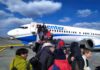
On January 5, 2024, Captain Brandon Fisher expertly managed an emergency on Alaska Airlines Flight 1282, a Boeing 737 MAX 9, when a door plug panel blew out shortly after takeoff. The incident, which occurred at approximately 16,000 feet, created rapid decompression in the cabin. Fisher, alongside his first officer, donned oxygen masks, communicated with air traffic control, and safely returned the plane to Portland, Oregon, preventing a potential catastrophe.
The National Transportation Safety Board (NTSB) later praised Fisher and his crew, deeming their actions exemplary. Yet, despite this commendation, Boeing’s legal filings in subsequent passenger lawsuits allegedly shifted blame onto Fisher and the crew, suggesting improper maintenance and pilot error. Outraged by this perceived scapegoating, Fisher filed a lawsuit against Boeing in an Oregon court.
Investigation Uncovers Manufacturing Flaws
Following the incident, the NTSB conducted a thorough investigation and concluded that the cause of the panel blowout was due to manufacturing defects. Specifically, it was discovered that four bolts were missing from the door plug, a result of improper repair during assembly at Boeing’s Renton, Washington facility and Spirit AeroSystems, a supplier acquired by Boeing in 2024. The missing bolts allowed the panel to shift gradually over 154 flights, culminating in the blowout.
This technical oversight was found to be undetectable during preflight checks, absolving the airline maintenance crew and pilots of responsibility. However, Boeing’s attempt to deflect liability onto Fisher and the crew has sparked significant controversy, given the company’s history of quality control issues and previous incidents involving the 737 MAX series.
Implications for Boeing and Aviation Safety
This lawsuit by Captain Fisher is a rare move, as pilots typically do not sue manufacturers. It underscores ongoing scrutiny of Boeing’s manufacturing practices, especially in light of the 737 MAX crises following the 2018 and 2019 crashes. The situation raises questions about pilot protections and accountability in the aviation industry, pressing Boeing to address safety and transparency concerns.
Alaska Airlines pilot who safely landed plane after panel blew out says Boeing unfairly blamed him https://t.co/jsTOi2EQW3 pic.twitter.com/n38pTwkm0t
— Eyewitness News (@ABC7NY) January 7, 2026
The incident has also prompted the Federal Aviation Administration (FAA) to ground certain 737 MAX 9 planes for inspections, while Boeing faces mounting pressure to ensure safety improvements. As the lawsuit progresses, it could set a precedent for how manufacturers handle accountability and support for pilots post-incident.
Sources:
Alaska Airlines pilot safely landed plane after panel blew out says Boeing unfairly blamed him