

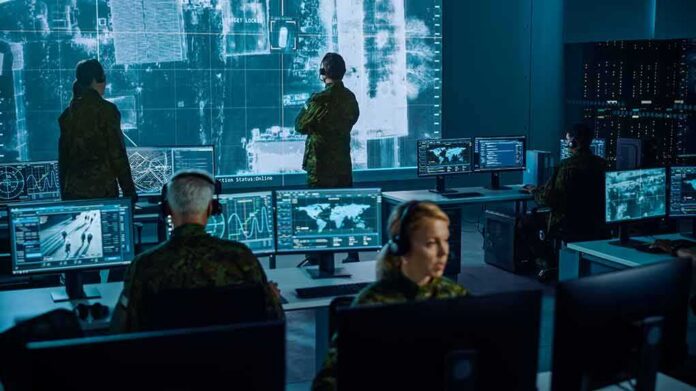
Analysts warn that corrupted combat data from the 2026 Iran war could mis-train U.S. and allied defensive AI, leading to late intercepts and missed kills.
Story Snapshot
- Experts say battlefield data from the Iran war was gathered in contested, unreliable conditions.
- Spoofed range labels in training footage could cause defensive AI to fire too late at drones.
- Defense studies call for rigorous data collection, cleaning, and continuous testing.
- Tamper-evident logs and provenance records are proposed to secure wartime datasets.
What Happened: Combat Data Collected Under Fire
Researchers report that Operation Epic Fury involved electronic warfare, spoofing, and jamming that can distort data at the moment of capture. They explain that sensors and cameras saw a messy fight, not a clean lab feed. They add that units often moved and restored records while under attack. That breaks normal chains of custody. Even when files survived, provenance grew shaky. The core claim is simple: if data is dirty at birth, models trained on it can learn the wrong lessons.
The most concrete risk described is a counter-drone model trained on video with shifted range labels. Spoofing could make a Shahed drone look farther away than it was. A model that learned from those labels could estimate range too high in combat. That could push the launch of an interceptor a few seconds late. In a drone sprint, that is the whole game. One late shot can leave a fuel depot or barracks exposed.
Why It Matters: Training AI On Trustworthy Data
Defense researchers stress that wartime artificial intelligence needs more than lots of data; it needs the right data, collected the right way. A 2026 review finds that data should be systematically collected, prepared, cleaned, and tested across the whole lifecycle. This means curating sources, checking labels, and tracking changes over time. Without that work, even a strong model can fail. The review’s bottom line fits the Iran case: volume cannot replace quality when lives are at stake.
Governance studies also point to gaps that make bad data more likely. A William and Mary paper describes inconsistent vetting across the defense enterprise and missing context about where data comes from. It says many datasets rely on outside labels that may not meet military needs. Those problems can hide inside big repositories. When pressure rises, teams may grab what they have and hope it works. That approach can push flawed data into training pipelines.
How Records Break: Spoofing, Jamming, and Restoration
The Iran fight featured threats that target the data itself. Spoofing can shift what sensors think they see. Jamming can scramble signals so frames drop or metadata drifts. Autonomous interceptors can resolve an engagement before humans record rich pre-shot details. Moving and restoring data under attack can break audit trails. The analysis argues that, taken together, these stresses make many records hard to trust for training unless they are graded first.
Technical scholars outline tools that can help. One proposal calls for tamper-evident logs that capture model versions, data-pipeline versions, sensor provenance, cryptographic hashes of inputs, uncertainty estimates, operator touches, and timing. These logs create a trace of who did what, when, and with which data. If a label was changed, the log should show it. If a sensor feed glitched, the log should flag uncertainty. That record would let testers quarantine suspect slices before training.
What The Pentagon Already Says It Needs
The Department of Defense has acknowledged these data risks in its guidance and test frameworks. Pentagon-linked work stresses that raw data is often not ready and needs wrangling before use. It calls for clear documentation of provenance, processing steps, and environment limits so testers can judge risk from data poisoning and bias. In short, official guidance supports disciplined data handling. The Iran case shows how hard that is when the enemy is trying to foul the feed.
'Battlefield data shared between allies for model training needs to be graded for quality, just as oil is,' writes John James. https://t.co/Yab8U4kqBj
— ASPI (@ASPI_org) November 2, 2026
Operation Epic Fury public materials confirm the scale and pace of the campaign, which would strain any data pipeline. High-tempo strikes, rapid redeployments, and counter-drone battles create edge cases and missing records. Analysts argue that this tempo makes a grading system urgent. A simple rubric could tag datasets by how confident teams are in their origins, labels, timing, and restoration history. That score could decide whether a dataset trains models or only supports rough analysis.
What Comes Next: A Practical Checklist
Experts outline steps leaders can act on now. First, grade battlefield datasets for provenance, interference, chain of custody, uncertainty, and restoration history. Second, quarantine contested-provenance slices from model training until audited. Third, run head-to-head tests using verified, uncertain, and deliberately corrupted sets to measure impacts on detection, tracking, and shot timing. Fourth, require tamper-evident logs and version control for every step of the pipeline. These moves align with existing defense guidance and can be fielded in phases.
Sources:
realcleardefense.com, aspistrategist.org.au, smartdev.com, wm.edu, media.defense.gov, digitaldividedata.com
© patriotspotlight.org 2026. All rights reserved.