

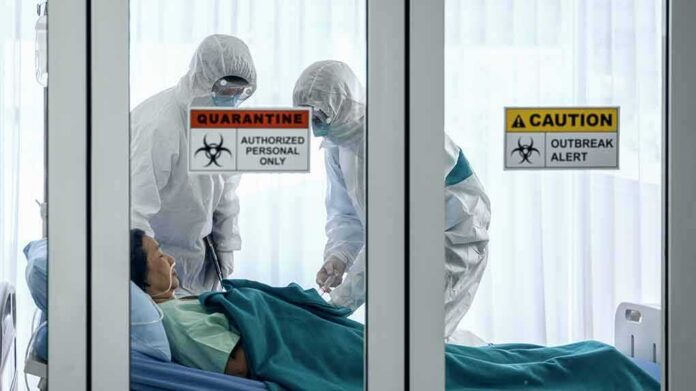
A Washington state resident died from H5N1 bird flu after exposure to infected dairy cattle, marking the year’s first U.S. avian influenza fatality tied to the cattle outbreak.
Story Snapshot
- Yakima County officials reported a resident died after H5N1 infection linked to infected dairy cattle.
- Health officials said the person had underlying health conditions and was hospitalized before dying.
- Washington confirmed infected dairy herds in October; more human cases involve cattle exposure.
- Officials say risk to the general public remains low, with concern focused on occupational exposure.
What Officials Confirmed About the Fatal Case
Yakima Health District reported that a county resident was infected with H5N1 avian influenza after contact with dairy cattle confirmed to be infected. Officials said the person was hospitalized with severe illness, had underlying health conditions, and died on November 1, 2026. The person’s name and age were not released. The Centers for Disease Control and Prevention identified the virus as H5N1, according to contemporaneous reporting that cited agency confirmation.
Health authorities said they were monitoring the patient’s contacts. Reports at the time described no sustained human-to-human spread connected to the case. That aligns with how agencies have framed this outbreak: the highest risk is for people who work with infected animals or handle raw milk and secretions, not for the general public. Officials also warned against consuming unpasteurized dairy products, which can carry pathogens when herds are infected.
How This Fits Into Washington’s Dairy-Cattle Outbreak
Washington confirmed its first detections of H5N1 in dairy cattle on October 8, 2026. Since then, Yakima County has logged multiple human infections in people with direct exposure to infected herds, including this fatal case. Public updates described dozens of affected herds statewide, with many clustered in Yakima County, underscoring a local occupational hazard even as agencies continued to describe the wider public risk as low.
Officials noted additional human cases tied to infected dairies around the same period, reinforcing the cattle-exposure pathway. This pattern is consistent with spillover during farm work, such as milking or close animal care. Health departments urged protective gear, hand hygiene, and prompt testing after exposures. They also emphasized pasteurization and routine food safety steps that kill viruses in milk before it reaches consumers.
Why Risk Is Higher for Workers but Lower for Most People
Federal and international assessments have repeatedly found that H5N1 can jump to people during close contact with infected animals, yet has not shown sustained person-to-person spread in the current outbreak. A recent policy brief reported 57 U.S. human infections in this period, with most linked to dairy cattle or poultry exposures. That balance explains why a fatal case can occur while the overall public risk rating remains low.
Public health agencies point to clear steps that cut risk for workers. These include eye and face protection during milking, gloves, and rapid reporting of symptoms after exposure. Veterinarians and farm managers are urged to separate sick animals, limit movement between herds, and boost biosecurity on equipment and vehicles. These measures reduce both animal-to-animal spread and the chance of spillover to people on site.
What We Still Do Not Know and What Comes Next
Officials did not release the person’s age, sex, or detailed medical timeline. They also did not publish full laboratory data such as viral sequencing or autopsy findings. That is common in early public health notices, which protect patient privacy while urgent work continues. Agencies said they would keep monitoring exposed contacts and infected herds and would issue updates as new data arrive.
"A Yakima County, Washington, resident hospitalized with severe avian influenza (H5N1) after exposure to infected dairy cattle died on November 1..
The death is the first from avian influenza reported in the US in 2026..
The Yakima Health District also confirmed a third human…— Hiroshi Yasuda (保田浩志) (@Yash25571056) November 3, 2026
For families, the guidance remains simple. Avoid unpasteurized milk. Wash hands after any animal contact. Seek care if you develop fever, cough, or eye irritation after working with sick birds or cattle. For workers and employers, the lesson is sharper. Protective gear and strict farm hygiene are not red tape. They are how we protect the people who feed the country while keeping a local outbreak from becoming a wider crisis.
Sources:
washingtontimes.com, kyma.com, upi.com, cidrap.umn.edu, aol.co.uk, healio.com, m.dailyadvent.com
© patriotspotlight.org 2026. All rights reserved.