
A compact Israeli submachine gun designed after 1948 grew into a global icon used by dozens of countries.
Story Snapshot
- Israeli officer Uziel Gal designed the Uzi after the 1948 Arab-Israeli War.
- The Israel Defense Forces introduced it to special forces in 1954, then wider service.
- A telescoping-bolt design and central grip magazine made the Uzi short and handy.
- Licensed production and exports spread the Uzi to users worldwide over decades.
Origins: From postwar need to a new design
Israeli officer Uziel Gal began designing a new submachine gun after the 1948 Arab-Israeli War. He focused on a compact, simple weapon that soldiers could control in close quarters. The design used blowback operation and stamped steel parts to speed production and cut cost. Encyclopedic histories identify the gun as named for Gal and tied to that postwar period of urgent need in a young state building its own arms base.
By 1950, the first prototype was complete. The Israel Defense Forces selected the gun for elite units in 1954 and soon expanded its use. That timeline appears across reference sources that track the path from trials to official service. The early fielding with special forces matched the gun’s role. Commandos and paratroopers needed compact firepower for raids, patrols, and urban fights where size and speed mattered more than long-range reach.
Engineering: Telescoping bolt and tight handling
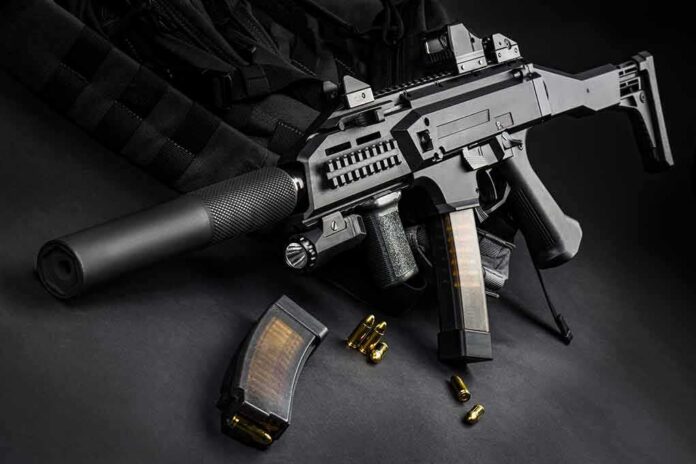
The Uzi’s signature feature is a telescoping bolt that slides around the rear of the barrel. That layout shortens the receiver without chopping the barrel itself. The magazine fits in the central pistol grip, which helps balance and speeds reloads under stress. The stamped steel body and wide internal clearances aim to keep the gun running in sand and mud. These choices built a rugged, easy-to-make tool for close-range combat and security work.
Israel Military Industries, later Israel Weapons Industries, presented the Uzi as a flagship Israeli design. The manufacturer describes the family’s evolution into carbine and mini variants while keeping the same basic operating system. The factory account also credits the gun’s simple maintenance and intuitive controls for its long life with military, police, and private security users across regions and missions over many decades.
Service record: From Sinai to city streets
Historical summaries say the Uzi first saw combat in the mid-1950s and proved useful in close fights. Israeli units used it in tight spaces, vehicles, and urban areas where rapid fire and compact size helped. Later, special operations and protective details around the world carried the gun. Its folding stock, compact frame, and controllable rate of fire made it a common choice for bodyguards, commandos, and police tactical teams for years before rifles replaced many roles.
By the late twentieth century, the Uzi had become one of the most recognized submachine guns worldwide. Reports describe licensed production outside Israel and steady exports that put the gun in service across many countries. While different sources give varying totals for how many were sold, the broad picture is clear: the Uzi moved from a national solution to a global product with a strong brand, backed by state industry and foreign partners over time.
Why this matters now: Design, markets, and trust
This story shows how a simple, proven design can scale fast when a state backs it and when users value reliability over flash. Many readers see a pattern here. Government and industry can deliver when needs are clear and goals are narrow. But hard numbers on production and exports are not always public, which leaves citizens guessing about deals made in their name. That gap feeds the view that the system hides facts and serves insiders first.
The Uzi also tracks a broader shift in security. Urban threats grew, and forces needed compact arms for tight spaces. The Uzi met that moment. Later, new rifles and better ammunition took over many roles. Still, the Uzi’s core lesson holds: practical engineering, quick fielding, and focused use can beat big, slow programs. Voters across the spectrum want that spirit aimed at today’s problems, with clear reporting of costs, results, and who benefits.
Sources:
19fortyfive.com, americanrifleman.org, iwi.net, nationalinterest.org
© patriotspotlight.org 2026. All rights reserved.