
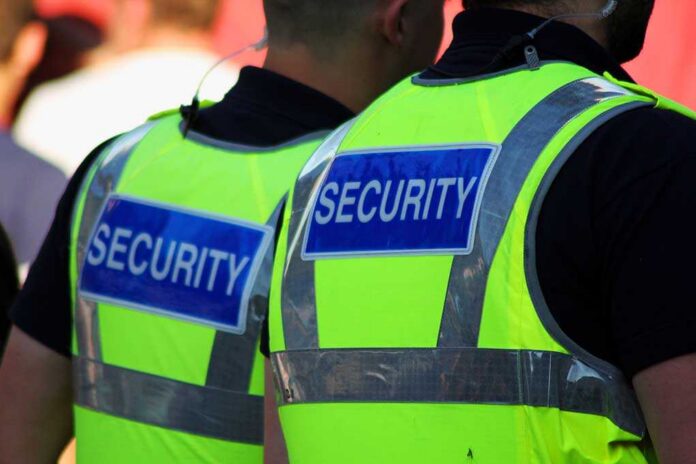
As millions flock to the 2026 World Cup, U.S. officials admit they “can’t control the lone wolf” even while promising that stadiums will be “very secure.”
Story Snapshot
- Top U.S. security officials say World Cup games will be “very secure” but warn lone‑wolf attackers remain the hardest threat to stop.
- Federal and local agencies are on their highest alert, with airspace “no‑drone zones,” tactical teams, and a central FBI operations hub watching for threats.[1][5][6]
- The greatest danger is not inside stadiums, but in “soft areas” like fan zones, streets, and transit lines packed with ordinary people.[1][3][5]
- Experts say lone‑wolf terrorism is growing, fueled by online radicalization and deep social frustration that many Americans already feel.[10]
What Officials Are Promising — And What They Admit They Cannot Stop
World Cup matches in the 11 American host cities will be “very secure,” according to Department of Homeland Security chief Markwayne Mullin, who is in charge of tournament security.[1][4] He says federal, state, and local agencies have built a tight security ring around stadiums and will use heavy screening and visible patrols to protect fans.[1][3] At the same time, he openly warns that lone‑wolf attackers in crowded public spaces are a major concern that no plan can fully control.[1][3][10]
Mullin describes “soft areas” outside the formal perimeter — places like streets, open plazas, and lines of people walking to gates — as the weak spots.[1][3] Local and state police will “flex” into these zones with more officers on the ground, but those areas will never be as locked down as the stadium itself.[1][3] Federal officials repeat a now familiar line: there are no “specific credible threats,” yet they remain on high alert because risk rises anytime huge crowds and global attention come together.[3][5]
How the Security Machine Is Being Stacked Around the World Cup
The Federal Bureau of Investigation (FBI) has reportedly raised all 11 host cities to their highest alert level, warning about drones, bombings, lone‑wolf attacks, scams, and cyber threats in briefings to local leaders.[5][6] The bureau has set up a special operations center at headquarters to pull in threat data from across the country and push it quickly to decision‑makers.[5][6] In cities like Miami and Atlanta, officials describe a layered response with bomb squads, special weapons teams, and high‑visibility patrols around stadiums and fan events.[5][7]
Airspace is a big focus because modern drones are cheap, easy to fly, and hard to trace.[5][6][7] The Federal Aviation Administration has created temporary no‑fly zones over World Cup stadiums, fan festivals, and some team sites, backed by technology that can detect and intercept unauthorized drones.[5][7] Officials say there will be “zero tolerance” for reckless drone use, with fines, criminal charges, and confiscation on the table.[7] This level of control inside the bubble contrasts sharply with the more open streets and transit corridors where lone actors could still strike.[1][3][5]
Why Lone Wolves Worry Security Experts — And What That Says About Our Politics
Lone‑wolf terrorism involves individuals who plan and carry out attacks on their own, often inspired online by political or religious ideas but not directed by a larger group.[8][10] Researchers have shown that big sports events are symbolic targets, attractive to attackers who want instant global attention.[9][11] A major think tank assessment of the 2026 World Cup concludes that the most likely danger is a domestic lone actor or small group hitting soft targets such as fan zones, transit, hotel districts, or lines outside stadium gates.
US security officials on alert for World Cup 'lone wolf' attacks
READ: https://t.co/UbTW1aSK6U
— Al Tesauro (@AlTesauro1776) June 11, 2026
Studies show lone‑wolf attacks in Western countries are often more common than group attacks and are boosted by fast online radicalization, especially among disaffected youth. Many attackers broadcast their plans or grievances on social media or to people around them before acting, which is why agencies watch online spaces so closely. For everyday Americans, this threat fits a broader fear: a system that can spend billions on security but still cannot fix the deeper anger, isolation, and loss of trust that push some people toward violence.
Shared Public Frustration: Big Promises, Soft Targets, and the “Deep State” Question
Conservatives and liberals may blame different policies, but many now agree that Washington is very good at big shows of force and weak at solving root problems. Massive World Cup security plans highlight that gap. The government can ring stadiums with metal detectors, drone shields, and tactical teams, yet it admits it cannot fully protect the ordinary streets where families actually gather.[1][3][5] That disconnect feeds the sense that the system mainly protects itself, not the people walking outside the fence.
At the same time, years of shifting terror alerts — from July Fourth warnings to now the World Cup — have trained the public to hear constant fear without clear accountability when nothing happens.[3][5] Officials say “extremely safe” but do not release detailed benchmarks or independent audits that would prove how secure fans really are.[5][11] For many on both the right and left, this pattern feels like classic deep‑state behavior: demand trust, hide the playbook, and hope the dice roll your way. The World Cup will test whether that model is still enough.
Sources:
[1] Web – US security officials on alert for World Cup ‘lone wolf’ attacks
[3] Web – US Security Officials On Alert For World Cup ‘Lone Wolf’ Attacks
[4] Web – From the skies to the streets, feds are bracing for World …
[5] Web – US on alert over possible ‘lone wolf attack’ during July 4th …
[6] YouTube – BREAKING | FBI Warns of Attacks to 11 U.S. Cities Hosting the World …
[7] Web – ISIS-Linked Outfit Threatens Attack On India-Pak T20 World …
[8] Web – America celebrating Fourth of July on guard
[9] Web – Lone wolf terrorism – Wikipedia
[10] Web – [PDF] Endgame? Sports Events as Symbolic Targets in Lone Wolf …
[11] Web – The Islamic State Threat to the 2018 FIFA World Cup
© patriotspotlight.org 2026. All rights reserved.