Biden’s top strategist admits under oath that he stood to pocket a staggering $4 million bonus had Joe Biden won re-election—raising hard questions about whether Biden’s inner circle put personal gain ahead of honest counsel during a national crisis of presidential fitness.
Story Snapshot
- Mike Donilon, a longtime Biden confidant and senior White House advisor, testified before Congress that a Biden 2024 victory would have triggered a $4 million payment to him personally.
- The disclosure came during House Oversight Committee hearings probing Biden’s mental and physical fitness, as concerns over the president’s capability dominated the 2024 campaign.
- Critics argue such lucrative, outcome-dependent bonuses create clear conflicts of interest for advisors tasked with providing candid assessments of a president’s health and readiness to serve.
- Biden’s withdrawal from the race meant the bonus was never paid, but the episode exposes a culture of financial entanglements at the highest levels of the Democratic administration.
- The controversy adds to conservative frustrations with elite self-dealing, lack of transparency, and the erosion of public trust in government institutions.
The Bonus Disclosure and Its Immediate Fallout
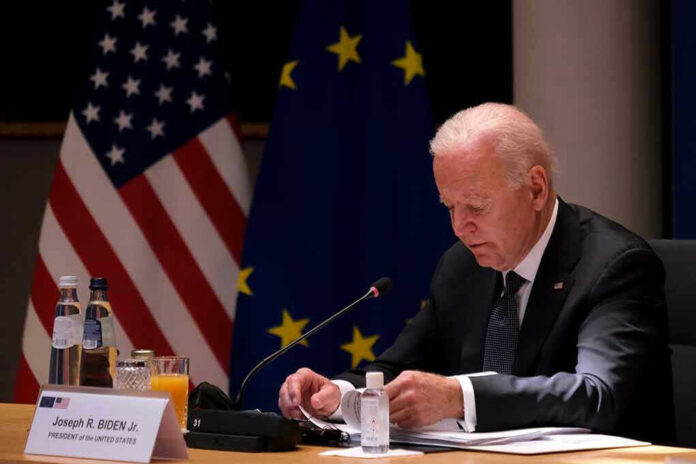
Mike Donilon, who served as a senior advisor to President Biden and was one of his most trusted political operatives for over four decades, revealed in sworn congressional testimony that his compensation package included a performance-based bonus worth up to $4 million, contingent on Biden’s re-election in 2024. This admission came as the House Committee on Oversight and Government Reform was investigating mounting concerns about Biden’s mental and physical fitness for office—a matter of intense public debate throughout the 2024 cycle. The timing and context of Donilon’s disclosure have fueled allegations that financial incentives may have influenced the advice and public statements of those closest to the president during a period of national uncertainty.
Donilon’s role was not merely symbolic; he was deeply involved in shaping Biden’s messaging, strategy, and even major policy decisions. As questions about Biden’s capacity grew louder, the revelation that a key advisor stood to gain millions based on electoral success has sparked bipartisan concern about the integrity of executive branch governance. While the bonus was never paid due to Biden’s withdrawal from the race, the episode has become emblematic of what many conservatives see as a broader pattern of self-enrichment and ethical blind spots in Washington.
Background: Donilon’s Influence and the Culture of Entitlement
Mike Donilon’s career is a case study in the revolving door between political consulting and high-level government service. A Georgetown Law graduate and veteran of multiple presidential campaigns, Donilon first joined Biden’s orbit in 1981 and became one of his most influential strategists, overseeing message development, advertising, and polling. After Biden’s 2020 victory, Donilon transitioned to a senior White House role, giving him direct access to the president and a hand in shaping both domestic and foreign policy. His compensation structure—including the now-revealed bonus—reflects the financialization of political loyalty, a trend that troubles many Americans who believe public service should be about duty, not dollar signs.
This arrangement is not unique to Donilon, but it is exceptionally visible due to the size of the potential payout and the sensitive nature of his advisory role. The fact that such a bonus was even contemplated during a period of national concern over presidential fitness underscores a disconnect between the priorities of political elites and the expectations of everyday citizens. For conservatives, it is a stark reminder of how far the administrative state has drifted from the principles of accountability and restraint.
Institutional and Ethical Implications
The Donilon bonus controversy raises fundamental questions about conflicts of interest at the highest levels of government. When senior advisors have millions of dollars riding on electoral outcomes, their counsel on matters of presidential health and capability cannot be assumed to be wholly objective. This is not a hypothetical concern: in 2024, the American people were grappling with genuine uncertainty about whether the president was fit to lead, and the stakes for the country were extraordinarily high. The potential for personal financial gain to distort professional judgment in such circumstances is a direct challenge to the notion of public service as a sacred trust.
In the long term, this episode may prompt future administrations—and Congress—to re-examine compensation structures for senior White House staff, particularly those in advisory roles where impartiality is essential. It also highlights the need for greater transparency around the financial arrangements of presidential confidants, so that the public can judge for themselves whether their interests align with the nation’s. For now, the Donilon disclosure stands as a cautionary tale about the risks of mixing lucrative incentives with the solemn responsibilities of governing.
Public Reaction and the Conservative Perspective
For many conservatives, the Donilon bonus story is a microcosm of broader frustrations with the Biden administration and the Democratic establishment. It encapsulates concerns about elite self-dealing, the blurring of lines between public service and private enrichment, and the lack of accountability in Washington. The fact that such a payout was even possible—let alone disclosed only under congressional pressure—fuels skepticism about the motives of those in power and deepens the divide between ordinary Americans and the political class.
This episode also reinforces conservative arguments for limited government, transparency, and a return to traditional values of public service. It is a reminder that the Founders’ vision of a government accountable to the people is undermined when those at the top see public office as a path to personal fortune. As the country moves forward under new leadership, the lessons of the Donilon bonus controversy should not be forgotten: the integrity of our institutions depends on the character and motives of those who serve.
Sources:
Harvard Institute of Politics: Michael Donilon Fellow Profile
UCSB Presidency Project: Biden White House Senior Staff Announcement
NBC15: Biden Aide Admits He Would Have Earned $4M Bonus If Former President Won 2024 Re-Election