One narrow waterway halfway around the world just pushed oil past $100 again—setting up another inflation gut-punch for American families who are tired of paying for chaos they can’t control.
Quick Take
- Crude prices jumped above $100 a barrel in early March 2026 as Middle East tensions disrupted shipping through the Strait of Hormuz.
- Reports cited roughly 16 million barrels per day trapped in the Persian Gulf due to unsafe tanker passage, with estimates ranging lower in other updates.
- President Trump publicly rejected negotiations, stating the U.S. would accept “no deal” short of Iran’s “unconditional surrender.”
- Gulf producers signaled stress, including precautionary cuts from Kuwait, while Qatar warned a prolonged conflict could push oil dramatically higher.
Oil Breaks $100 as the Strait of Hormuz Becomes the Pressure Point
Oil surged after disruptions tied to U.S.-Iran tensions raised fears that shipping through the Strait of Hormuz could be curtailed. On March 6, 2026, Brent crude briefly touched $90 per barrel while U.S. benchmark WTI moved above $87 in a sharp one-session jump. By March 8, reported prices reached about $108.58 a barrel, marking the first $100-plus period since 2022’s shock.
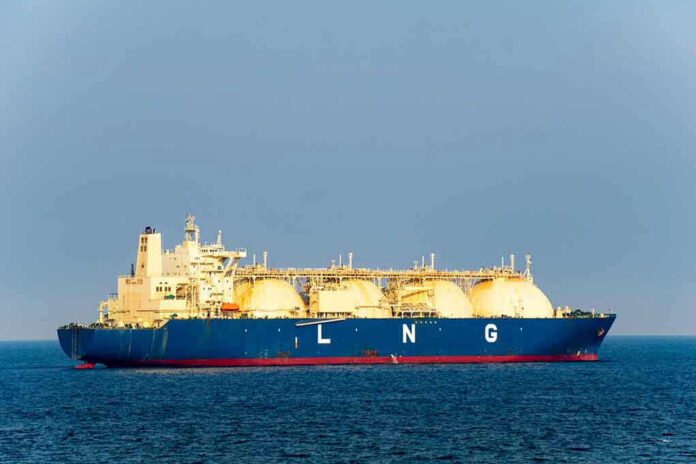
Market anxiety centers on how much energy traffic funnels through Hormuz. Research cited the strait as carrying roughly 20% of global oil and liquefied natural gas supply, which makes even partial disruptions instantly consequential. Shipping trackers and analysts described millions of barrels per day unable to move safely, with one figure at about 16 million barrels per day stranded and another estimate spanning 7–11 million barrels per day of crude plus 4–5 million barrels per day of refined products.
Trump’s Hard-Line Message Meets a Supply Shock the Market Can’t Ignore
President Trump’s posture became part of the price story because traders price risk as much as they price barrels. Reports quoted Trump saying there would be “no deal” with Iran except “unconditional surrender,” reinforcing a no-compromise signal as the standoff intensified. That matters because oil pricing is forward-looking: when markets see a higher probability of escalation, they bid up futures to insure against sudden shortages.
Analyst commentary in the research emphasized that this isn’t a typical “headline spike” that quickly fades if producers can smoothly reroute or ramp output. Gulf exporters face practical constraints when shipping lanes are threatened, and storage can fill quickly if crude cannot leave ports. The research also noted that production restarts can take days or weeks if output is paused for safety or logistics, which is why the fear premium can persist even without a total shutdown.
Kuwait Cuts, Qatar Warns, and the Gulf Signals Real Economic Stress
Gulf states signaled strain as the shipping situation tightened. Kuwait, described as OPEC’s fifth-largest producer, was reported to have enacted precautionary production and refinery-output cuts tied to the security environment and shipping threats. When a producer trims output during a disruption, markets read it as confirmation that the situation is not merely theoretical. Those moves compound concerns because they reduce immediate supply flexibility.
Qatar’s energy minister offered the starkest warning in the material provided, arguing that war could “bring down world economies” and that a broader shutdown among Gulf producers could drive oil toward $150 per barrel. Other forecasts in the research were less extreme, including modeling that projected lower prices by quarter-end while acknowledging potential for higher levels over a 12-month horizon. The spread between forecasts underlines that duration—not just severity—will decide the economic hit.
What $100+ Oil Means for U.S. Inflation and Household Budgets
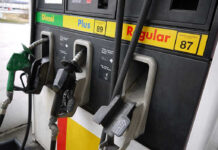
Higher crude prices translate quickly into gasoline and diesel costs, and then into higher prices for transported goods, food, and industrial inputs. The research connected the move to renewed inflation risk across the U.S. economy, a sensitive point for voters who already lived through years of price spikes and budget strain. Even if crude later pulls back, short bursts can still hit families through immediate fuel costs and businesses’ hedging and surcharge decisions.
The research also showed uneven market reactions: some energy-related equities moved modestly while broader indexes weakened, a reminder that expensive energy can act like a tax on growth. That dynamic is why a Hormuz-driven spike matters beyond the pump. For Americans who want stable prices, limited government overreach, and a stronger domestic footing, the lesson is simple: U.S. energy security still collides with global chokepoints—and the bill shows up at home.
Key uncertainty remains the duration and scale of disruption. The research itself flagged that a full, confirmed closure is difficult to verify from public reporting and that estimates of trapped supply vary. Still, multiple sources agreed on the core driver: the Strait of Hormuz is pivotal, and rhetoric plus real-world shipping risk can move prices fast. If tensions cool, forecasts suggest moderation; if they don’t, consumers should brace for continued volatility.
Sources:
Oil prices surge above $100 a barrel in 2022