
Trump’s Iran strategy is testing a blunt new reality: America can break a hostile regime’s war machine from the air—without sending U.S. troops into another ground quagmire.
Story Snapshot
- Operation Epic Fury began February 28, 2026 as a major U.S. air campaign against Iran focused on leadership, missile forces, and command-and-control—not a ground invasion.
- U.S. and Israeli aircraft struck Iranian command centers, IRGC facilities, air defenses, and hardened ballistic-missile sites, with B-2 bombers and fifth-generation fighters central to the plan.
- U.S. military leadership reported sharp early declines in Iranian missile and one-way drone launches, suggesting degraded strike capacity after the opening wave.
- Iran retaliated with missiles and drones aimed at Israel and U.S. bases around the Gulf while forming an interim leadership council after top leadership losses.
Operation Epic Fury: Air Campaign First, Invasion Last
Operation Epic Fury opened February 28, 2026 under President Donald Trump with a stated emphasis on air power rather than occupation forces. U.S. Central Command publicly confirmed B-2 stealth bombers used 2,000-pound munitions against hardened ballistic-missile facilities as the campaign expanded across multiple target sets. The strike plan centered on leadership nodes, military infrastructure, and the security apparatus, signaling a doctrine built around disabling capability fast rather than seizing territory.
U.S. and allied planners treated Iran’s strike systems as the immediate threat driver. Reported target categories included command-and-control hubs, IRGC headquarters elements, integrated air defenses, missile sites, and military communications—assets that enable retaliation and regional intimidation. Naval-related targets were also on the list, including ships, submarines, and anti-ship missile installations. That target selection points to a campaign designed to reduce Iran’s ability to hit Israel, U.S. forces, and Gulf partners as quickly as possible.
What Was Deployed: Stealth Bombers, Fifth-Gen Fighters, and Massed Air Power
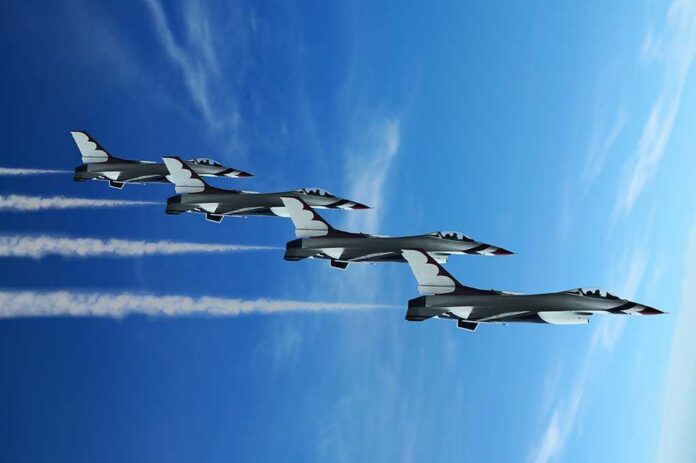
U.S. forces reportedly brought a broad mix of platforms to sustain tempo: B-2 strategic bombers, F-35s and F-22s, and a large supporting cast of fourth-generation fighters and enabling aircraft. The research summary describes more than 200 fighter aircraft involved in coordinated operations, plus electronic attack, early warning, reconnaissance, and unmanned systems. Layered air and missile defenses—Patriot, THAAD, and Aegis ballistic missile defense—were part of the wider posture to blunt Iran’s retaliation.
One notable development was the reported first documented U.S. combat use of low-cost, one-way attack drones modeled after Iranian-style systems. If accurate, that signals the U.S. is not only countering Iran’s tactics but also adopting cost-imposing tools that can be deployed in volume. The campaign also highlighted software and sensor advantages: research notes AI-enhanced sensor fusion tied to “Project Overwatch” for faster identification and reduced pilot decision latency on F-22 and F-35 platforms.
Early Results and Known Unknowns: Claims of Degraded Iranian Launch Capacity
U.S. military leadership publicly described major early effects. As of March 5, 2026, Gen. Dan Caine reported an 86% reduction in Iranian ballistic-missile launches and a 73% reduction in one-way drone launches compared with the opening days, alongside more than 2,000 targets struck. Those figures, if sustained, would indicate the campaign successfully hit launch infrastructure, command links, and stockpiles that fuel Iran’s long-range pressure strategy across the region.
Some elements remain difficult to evaluate from the available data. Iranian authorities reportedly said more than 200 people were killed, including senior leaders, but independent verification was not established in the research summary. A separate reported incident—three F-15s shot down in a friendly-fire event in Kuwait—was also noted without detailed public explanation. Those gaps matter for accountability and assessment, even if they do not change the basic outline of an air-centric approach.
Iran’s Response and the Diplomatic Endgame Question
Iran responded with missiles and drones aimed at Israel and U.S. bases across the Gulf region and also targeted Saudi Arabia and Dubai, according to the research summary. After leadership losses, Iran reportedly moved to a stopgap governing structure by appointing Ayatollah Alireza Arafi to a three-member leadership council until a new supreme leader is chosen. That leadership turbulence creates uncertainty about command continuity—and raises the risk of miscalculation during a high-tempo air war.
Invasion Not Needed: The U.S. Air Force Is Betting on B-2 Bombers and F-35 Fighters To Win the Iran Warhttps://t.co/eJDKucU4qc
— 19FortyFive (@19_forty_five) March 6, 2026
Diplomacy remains the unresolved hinge. A senior White House official signaled that “new potential leadership” in Iran had indicated openness to talks and that President Trump was “eventually” willing to engage, while operations continued. For a conservative audience wary of open-ended foreign commitments, the key metric is whether air dominance translates into enforceable terms—verifiable limits on missile and drone threats—without sliding into nation-building. The research provides no timeline or conditions, so outcomes are still uncertain.
Sources:
Middle East war: US unveils firepower used in Iran strikes; B2 bombers, jets, ships, missiles named
US Deploys Mix Of Military Aircraft: Iran
US military strikes Iran: machinery, weaponry used in war
F-35s Deploy to Middle East as US Talks Iran
More U.S. Fighter Aircraft Heading To Middle East