
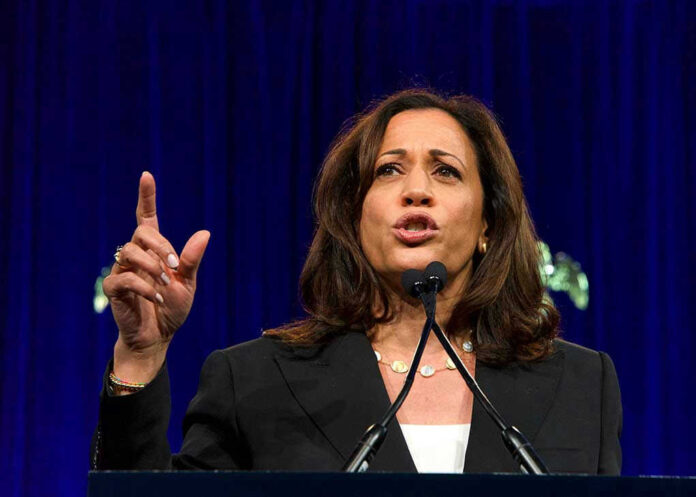
President Trump’s unprecedented move to revoke Kamala Harris’ Secret Service protection before its extension expired has ignited a fierce debate about security, precedent, and partisan power in America.
Story Snapshot
- Trump revoked Harris’ extended Secret Service protection abruptly, leaving state and local law enforcement to fill the gap.
- The decision broke with recent precedent and came without public explanation, fueling accusations of political retaliation.
- California officials, including Governor Newsom and Mayor Bass, condemned the move as unsafe and politically motivated.
- The shift places new burdens on local agencies and raises questions about the politicization of security for former officials.
Revocation of Extended Secret Service Protection
On August 29, 2025, President Trump signed an executive memorandum that revoked the extended Secret Service protection for former Vice President Kamala Harris, effective September 1. This decision cut short the protection that had been extended by former President Biden, who had cited ongoing security concerns. The move was made before the expiration of the extension and came without any public explanation from the Trump administration. This is a highly unusual step, as no recent precedent exists for rescinding such protection before the scheduled end.
After the federal withdrawal, responsibility for Harris’ safety shifted rapidly to local and state agencies, including the LAPD Metropolitan Division and the California Highway Patrol. These agencies required gubernatorial approval to step in, and their intervention coincided with Harris’ scheduled public appearances, such as a book tour. The sudden change in security protocols left many questioning whether political motivations—rather than security assessments—drove the decision. Harris’ spokesperson confirmed that no official reason was provided for the revocation, adding to concerns about transparency and motive.
Political Fallout and Stakeholder Responses
The reaction from California officials was swift and critical. Los Angeles Mayor Karen Bass labeled the move “another act of revenge” and said it posed a direct threat to Harris’ safety. Governor Gavin Newsom’s office accused the Trump administration of allowing public official security to be dictated by “erratic, vindictive political impulses.” These statements reflect the broader concern that executive authority is being used to settle political scores, setting a troubling precedent for the treatment of former high-ranking officials. Meanwhile, the White House defended the action by citing standard timelines for post-vice-presidential protection, but offered no further justification.
This new reliance on state and local law enforcement has not gone unnoticed. The added burden on these agencies—already stretched by ongoing protests and federal interventions in Los Angeles—raises questions about resource allocation and the proper role of federal government in protecting former officials. The lack of federal support has forced local agencies to divert elite officers to Harris’ security, sparking union backlash and criticism over the use of limited police resources for what many see as a politically charged assignment.
Implications for Security and Precedent
The short-term impact is clear: Harris now depends on state and local agencies for her safety, especially during public events. This shift increases the resource burden on these agencies and raises immediate security concerns for Harris and her family. In the long term, the move sets a precedent for revoking extended protection for former officials, which has typically been granted only in exceptional circumstances. Security experts warn that such actions may have a chilling effect on the willingness of former officials to participate in public life after leaving office, due to fears that security decisions could be swayed by political considerations.
Legal scholars acknowledge that the president holds broad discretion over Secret Service assignments, but caution that politicizing such decisions undermines the nonpartisan intent of protective services. Political analysts and public administration experts agree that continuity and nonpartisanship in security are critical. The debate has also sparked calls for legislative review of Secret Service protection policies to ensure independence from political influence. As the situation unfolds, it remains to be seen whether this action will stand as a one-off exception or become a new norm in the treatment of political adversaries.
LAPD ends Kamala Harris security after union backlash over elite officer use: report https://t.co/NFT7qz9AOd
— Fox News Politics (@foxnewspolitics) September 8, 2025
Ultimately, the revocation of Harris’ protection highlights ongoing tensions between executive authority, individual security, and the politicization of government resources. For many Americans concerned about constitutional rights, limited government, and the dangers of unchecked executive power, this story underscores the need for greater transparency and safeguards against political retribution in federal security decisions.
Sources:
Elite California unit steps up after Kamala Harris’ Secret Service detail times out
Trump revokes Harris’ Secret Service protection, prompting state response