
Supreme Court grants certiorari in Boulder climate lawsuit, delivering a major victory for oil companies and the Trump administration against radical state overreach into federal energy policy.
Story Highlights
- U.S. Supreme Court on February 23, 2026, agrees to hear oil firms’ appeal against Boulder’s 2018 climate tort suit, halting state proceedings.
- Trump DOJ backs defendants, arguing Clean Air Act preempts local claims over interstate emissions, protecting national energy production.
- Case could end dozens of similar suits nationwide, shielding industry from billions in liability pushed by Democrat-led localities.
- Expands review to jurisdiction issues, signaling justices’ skepticism of state court power grabs on global climate matters.
Case Origins and Lower Court Rulings
Boulder City and Boulder County filed suit in 2018 against ExxonMobil and Suncor Energy, claiming state law violations from global emissions causing local heat waves, wildfires, drought, and ozone issues. The localities seek billions for mitigation costs like infrastructure and emergency response. Lower courts denied dismissal motions. In May 2025, Colorado Supreme Court upheld those rulings, ruling the Clean Air Act allows state regulation of interstate emissions. Oil companies appealed, asserting federal preemption disrupts uniform national policy.
Supreme Court Grants Review
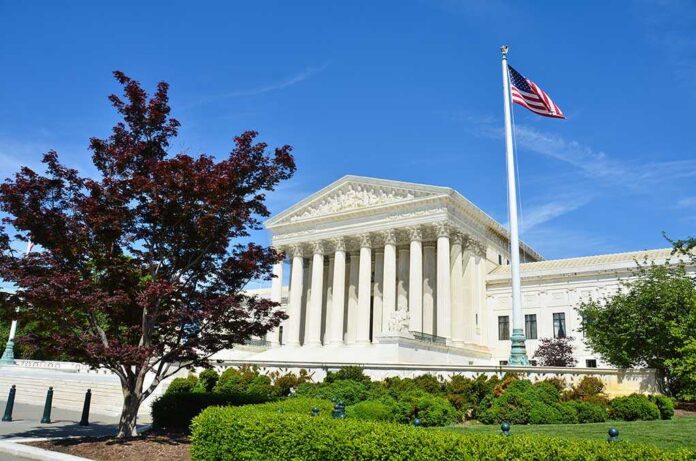
On February 23, 2026, the U.S. Supreme Court granted certiorari in Suncor Energy (U.S.A.) Inc. v. County Commissioners of Boulder County. The Court accepted the petition question on whether federal law preempts state-law claims for greenhouse gas emissions. Justices added a second question on statutory and Article III jurisdiction, prompted by Boulder’s response brief raising concerns. At least four justices voted to take the case; oral arguments remain unscheduled, likely for next term. The ruling halts Boulder’s case pending decision.
Trump Administration Backs Energy Sector
The Trump Department of Justice supports the oil defendants, arguing state suits overreach into federal domain and threaten interstate commerce. This aligns with administration efforts to block similar litigation in Hawaii and Michigan, countering what officials call Democrat-led attacks on fossil fuel production. Trump policies prioritize American energy independence, rejecting local shakedowns that could cripple domestic industry amid global demand. Federal backing underscores tensions between state remedies and national regulation.
Power dynamics favor oil companies with economic leverage and DOJ alignment against localities reliant on prior state wins. Energy-producing states file amicus briefs reinforcing preemption arguments. This case tests limits on blue-city agendas imposing nationwide costs on producers.
Broader Implications for Climate Litigation
The decision could preempt most of 60-plus climate tort suits filed since 2017 by state and local governments seeking damages from fossil fuel firms. Short-term, it pauses Boulder’s pursuit; long-term, a win for defendants shields billions in potential liability, bolstering U.S. energy sector stability. Communities face ongoing adaptation costs without payouts, but conservatives view this as essential check on government overreach and virtue-signaling lawsuits. Economic impacts favor production over litigation-driven burdens.
Unlike prior denials in Honolulu and Minnesota cases, this grant reflects heightened scrutiny, paralleling pending Chevron v. Plaquemines Parish. Experts note potential to reshape state strategies, limiting venue-shopping for climate accountability while upholding federalism principles vital to conservative values.
Sources:
Supreme Court says it will take up climate change law challenge out of Colorado
US rules: Supreme Court takes Colorado oil climate lawsuit
Climate change goes back to the Supreme Court: Colorado edition
Justices Will Mull Future Of State Climate Torts