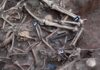
Nearly 800 babies’ bodies are being unearthed from a sewage tank at a former Catholic home for unwed mothers in Ireland, exposing decades of religious and state complicity in one of the country’s darkest scandals.
Key Takeaways
- Excavation has begun at the former Bon Secours Mother and Baby Home in Tuam, Ireland, where approximately 800 infants and young children were improperly buried in a septic tank.
- Historian Catherine Corless uncovered death certificates for nearly 800 children who died at the home between the 1920s and 1961, but found only one burial record.
- The Catholic Church-run institution was part of a network where unmarried pregnant women were sent and often forcibly separated from their children.
- A major government inquiry revealed approximately 9,000 children died in 18 mother-and-baby homes across Ireland, with 56,000 women and 57,000 children passing through these institutions over 76 years.
- The excavation, expected to take two years, aims to identify remains through DNA analysis and provide proper burials for these forgotten children.
A Dark Chapter Uncovered
In the small town of Tuam in County Galway, Ireland, workers have begun the somber task of excavating a site that has come to symbolize one of Ireland’s most shameful historical chapters. The former Bon Secours Mother and Baby Home, operated by Catholic nuns from 1925 to 1961, was where unmarried pregnant women were sent to give birth away from public view. Many were forced to work in harsh conditions as penance for their “sins,” while their children were frequently taken from them. Now, forensic teams are carefully unearthing what is believed to be the remains of approximately 800 infants and young children who died at the institution and were unceremoniously buried in a disused septic tank.
The discovery of this mass grave is largely due to the tireless work of local historian Catherine Corless, whose research revealed death certificates for nearly 800 children who died at the home between the 1920s and 1961. Despite these documented deaths, she found only one burial record, raising alarming questions about what happened to these children’s remains. Preliminary investigations confirmed her suspicions when a mass grave was discovered in an underground sewage structure, with DNA analysis showing the remains belonged to children ranging from 35 weeks gestation to 3 years of age. The causes of death included respiratory infections, measles, tuberculosis, gastroenteritis, and malnutrition.
Institutional Neglect and Callous Indifference
The Tuam home was just one of 18 such institutions across Ireland where approximately 56,000 unmarried women and their 57,000 children were sent over 76 years. A comprehensive government inquiry found that about 9,000 children died in these homes – an astonishing mortality rate of 15%, more than double the national average at the time. This statistic alone speaks volumes about the neglect these children suffered. Many survivors and historians attribute this neglect to the prevailing social and religious attitudes that viewed illegitimacy as shameful and the children of unmarried mothers as undeserving of the same care as those born within marriage.
“There are so many babies, children just discarded here. There are no burial records for the children, no cemetery, no statue, no cross, absolutely nothing,” said Catherine Corless, the local historian whose research exposed the Tuam scandal.
The sisters of the Bon Secours order who ran the Tuam home have issued what they called a “profound apology” for failing to “protect the inherent dignity” of the women and children in their care. This belated acknowledgment comes far too late for the thousands who suffered and died under their watch. The Catholic Church, which wielded enormous social and political power in Ireland during this period, largely turned a blind eye to the plight of these children, while the Irish state was complicit in funding and enabling the system that treated unmarried mothers and their “illegitimate” children as societal outcasts.
Seeking Justice and Dignity
The excavation, which began following legislation passed in 2022, is expected to take two years to complete. Forensic experts are meticulously analyzing and preserving the remains, with the goal of returning identified remains to families where possible. For those remains that cannot be identified, plans are in place for a dignified burial. Daniel MacSweeney, who is leading the exhumation process, has stated that survivors and family members will be allowed to view the works, and the site will remain under strict forensic control throughout the process.
“All these babies and children were baptised but still the church turned a blind eye. It just didn’t matter, they were illegitimate, that’s the stance that they took,” said Catherine Corless, local historian who uncovered the Tuam scandal.
Irish Prime Minister Micheal Martin has acknowledged the situation as “harrowing” and emphasized the importance of the excavation in providing answers and closure. “It’s a very, very difficult, harrowing story and situation. We have to wait to see what unfolds now as a result of the excavation,” Martin stated. For the survivors of these institutions and the relatives of those who died there, this excavation represents a slow but necessary process of justice. DNA samples are being collected from potential relatives in hopes of identifying as many of the remains as possible, giving names back to those who were denied dignity in both life and death.
A Nation Confronting Its Past
The Tuam Mother and Baby Home scandal has forced Ireland to confront a past that contrasts sharply with its global reputation. While Irish culture is celebrated worldwide, this dark chapter reveals the profound human cost of religious dogma and social control when left unchecked by proper oversight. The systematic devaluation of human life based on circumstances of birth represents a moral failure of both church and state that continues to reverberate through Irish society today. The excavation at Tuam is not merely an archaeological exercise but a profound act of national reckoning.
For conservatives who value the sanctity of life and family, this tragedy serves as a stark reminder that institutions—even religious ones—require transparency and accountability. When morality becomes weaponized against the vulnerable rather than serving to protect them, the result is not righteousness but cruelty. The babies of Tuam deserved better than a septic tank for their final resting place. Now, decades later, Ireland is taking steps to give them the dignity in death that they were denied in their brief lives.