Federal arrests of active wildfire firefighters in Washington raise new questions about whether immigration enforcement is undermining public safety and putting American communities at greater risk.
Story Snapshot
- Two firefighters were arrested by U.S. Border Patrol during the Bear Gulch Fire, disrupting critical emergency operations.
- Dozens of contract workers were also removed from the fire zone, reducing the workforce fighting Washington’s largest wildfire.
- The incident highlights the growing intersection of immigration enforcement and disaster response under new federal directives.
- Local communities and tribal leaders voiced concern about the impact on safety and the continuity of essential services.
Federal Immigration Enforcement Disrupts Wildfire Response
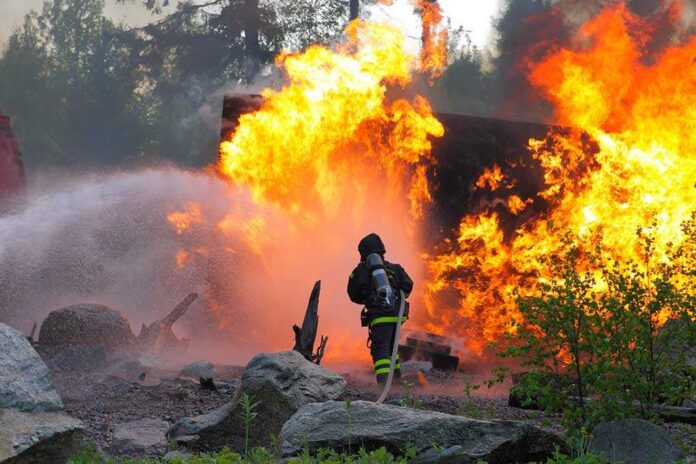
On August 27, 2025, U.S. Border Patrol agents arrested two firefighters and removed dozens of contract workers from the Bear Gulch Fire zone in Washington’s Olympic Peninsula. This occurred while hundreds of personnel were actively engaged in containing a wildfire threatening thousands of acres in Olympic National Forest and National Park. The sudden enforcement action reduced firefighting capacity, raising alarm in local communities and among emergency managers who rely on a fully staffed response during major disasters.
Historically, wildfire operations in the West have depended on a diverse workforce, including seasonal, contract, and non-citizen personnel. The Bear Gulch Fire, which began on July 6 and rapidly grew to over 8,300 acres by early August, already strained local resources. Previous incidents in California and Oregon have shown that immigration enforcement at disaster sites can disrupt emergency response, but the scale and timing of the Bear Gulch incident are particularly rare and controversial. Such actions during ongoing emergencies risk undermining public trust and operational effectiveness.
Policy Context: Immigration Crackdown During Disasters
Federal immigration policy under the Trump administration has shifted toward aggressive enforcement, even in settings like disaster response. Project 2025 and the “One Big Beautiful Bill Act” both call for expanded cooperation between local and federal law enforcement and increased workplace raids, including at worksites critical to public safety. These measures are framed as responses to a perceived border crisis and a need to protect American communities, but critics warn that indiscriminate enforcement can jeopardize essential services and public safety, especially during emergencies.
Fire management experts and labor advocates have long cautioned that removing trained personnel during active incidents can compromise both immediate safety and long-term community resilience. When enforcement actions interrupt firefighting, the risks extend beyond the individuals detained—local residents, tribal nations, and vulnerable communities face heightened danger from unchecked fires and hazardous air quality. Calls for clearer protocols to keep immigration enforcement from interfering with disaster response are growing louder among emergency professionals.
Stakeholder Reactions and Community Impact
Local officials and tribal leaders, including the Skokomish Tribe, expressed deep concern about the impact of the arrests and removals on both firefighting capacity and community safety. Many residents already face hazardous air quality and the threat of evacuation as the fire burns unchecked in parts of the region. The situation highlights the delicate balance between enforcing immigration laws and maintaining uninterrupted emergency response. With no official statement from Border Patrol or fire agencies explaining the rationale for the timing or coordination of the enforcement action, uncertainty persists among those affected.
Two firefighters battling Washington state’s biggest wildfire arrested by Border Patrol agentshttps://t.co/Y7tdkk2RJE
— MSN Canada (@MSNca) August 29, 2025
The incident has also reignited debate over the role of non-citizen and contract workers in disaster response. Firefighting agencies and emergency managers emphasize the need for a reliable workforce, while federal directives push for stricter immigration compliance without clear carveouts for disaster scenarios. This tension places local communities in the crossfire, potentially leading to greater economic and health risks if critical services are disrupted by enforcement actions at the height of crisis.
Broader Implications for Public Safety and Policy
The Bear Gulch Fire arrests underscore the far-reaching consequences of aggressive immigration enforcement at the expense of public safety and operational continuity. As new federal directives expand detention and workplace raids, emergency managers must navigate conflicting mandates—protecting their communities while complying with policies that may hinder their ability to respond effectively. The debate over the proper balance between upholding the rule of law and ensuring uninterrupted emergency services is likely to intensify as similar incidents become more frequent.
Ultimately, the question facing policymakers and the public is whether the pursuit of immigration enforcement should ever come at the cost of undermining critical services and endangering American lives, especially in times of crisis. The Bear Gulch episode stands as a cautionary tale for communities nationwide about the dangers of government overreach interfering with the missions that matter most: protecting lives, property, and the American way of life.
Sources:
Smoke, sprinklers, aluminum foil: Fighting fire on the Olympic Peninsula
Olympic National Park Fire Conditions and Updates
2 firefighters arrested at Washington’s Bear Gulch Fire amid Border Patrol operation
Border Patrol arrests firefighters at Bear Gulch Fire
Firefighters arrested in Washington by Border Patrol