
In the largest workplace immigration raid in years, federal agents detained over 450 individuals at Hyundai’s Georgia battery plant construction site, reigniting debates over illegal immigration, corporate accountability, and the protection of American jobs and values.
Story Highlights
- Federal agencies detained at least 450 suspected illegal immigrants at the Hyundai–LG battery plant construction site in Georgia.
- The operation marks the biggest immigration enforcement action at a U.S. manufacturing site in recent years.
- Hyundai and LG face scrutiny over subcontractor labor practices, while South Korea protests the raid’s impact on its citizens and business interests.
- The raid raises questions about the enforcement of immigration laws, labor exploitation, and the risks foreign investment brings to American workers.
Massive Immigration Raid Disrupts Hyundai Plant Construction
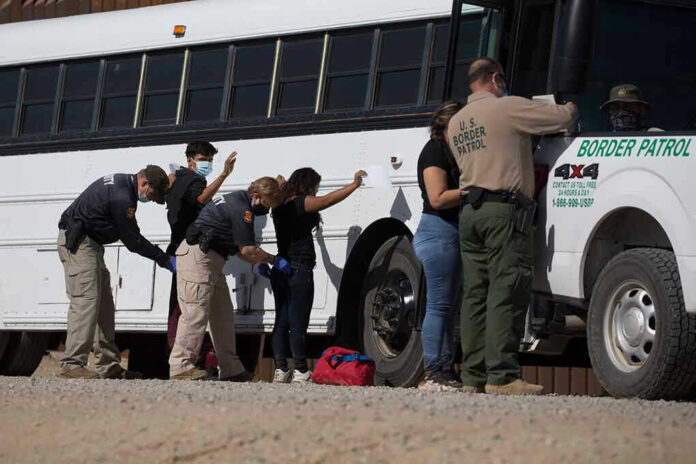
On September 4, 2025, U.S. Immigration and Customs Enforcement (ICE), together with multiple federal agencies, executed a large-scale raid at the Hyundai–LG Energy Solution battery plant construction site in Ellabell, Georgia. Authorities detained at least 450 individuals suspected of being unlawfully present in the United States during an ongoing criminal investigation into illegal employment practices. The operation immediately halted construction at the battery plant, although the nearby Hyundai electric vehicle manufacturing facility continued operations unaffected. Federal officials confirmed the scale of the raid, which is the largest such action at a manufacturing site in recent U.S. history, and announced further briefings are planned as the investigation proceeds.
This raid comes at a time of heightened political focus on border security and labor market protections under the Trump administration. The $7.6 billion Hyundai–LG project represents the largest single industrial investment in Georgia’s history and is a cornerstone of the state’s economic development strategy. While Hyundai employs about 1,200 workers at the main plant, thousands more are involved in construction, often through layers of contractors and subcontractors. None of the detained individuals were direct employees of Hyundai; instead, they worked for construction contractors now under investigation. This distinction highlights long-standing concerns about the use of labor brokers and the vulnerability of large infrastructure projects to illegal hiring practices that can undermine the local workforce and fair competition.
Federal Enforcement, Corporate Accountability, and Diplomatic Tensions
ICE and the Department of Homeland Security led the enforcement operation, supported by agencies including the ATF, FBI, DEA, and Georgia State Patrol. Their stated goal is to enforce immigration and labor laws, protect the domestic workforce, and ensure compliance with federal regulations. Hyundai and LG, as major foreign investors and project owners, have issued statements distancing themselves from the direct employment of those detained, emphasizing their commitment to legal compliance. The South Korean government responded by dispatching consular officials to Georgia and formally protesting the treatment of its nationals and the potential impact on Korean companies operating in the U.S. These diplomatic tensions underscore the complexities that arise when strict immigration enforcement intersects with international business interests, especially in sectors with substantial foreign investment.
Construction at the battery plant remains suspended as the investigation continues, creating economic uncertainty for local workers and businesses. The event has already triggered increased scrutiny of labor practices across the rapidly growing electric vehicle and battery manufacturing sector, raising the prospect of tighter regulation and oversight. For many Americans, the raid is seen as a long-overdue step to combat illegal immigration and restore the rule of law after years of lax enforcement that eroded confidence in national sovereignty and labor protections.
Broader Impacts on American Workers, Industry, and the Immigration Debate
The immediate disruption of a multi-billion-dollar project has reverberated across Georgia’s local economy. Delays in completion could affect the supply chain for Hyundai’s U.S. electric vehicle production, while increased regulatory scrutiny may drive up compliance costs for domestic and foreign contractors alike. Business groups have voiced concern about the unpredictability of federal enforcement actions, but for conservative Americans, the operation represents a necessary correction to years of unchecked illegal hiring and corporate neglect. The broader industry faces new pressure to ensure that all workers are lawfully employed, and that subcontracting does not serve as a loophole to bypass immigration laws or undermine domestic employment opportunities.
Experts and labor advocates note the risks of relying on poorly monitored subcontracted labor in large projects, especially where labor shortages are acute. Legal scholars emphasize the challenges in assigning employer liability when contractors and labor brokers are involved, complicating enforcement and accountability. The raid has also fueled debate over the balance between protecting American jobs and welcoming foreign investment, particularly when overseas companies benefit from U.S. incentives but may not enforce the same standards for hiring and workplace compliance. While the Trump administration affirms its commitment to upholding immigration laws and defending the interests of American workers, the fallout from such raids—diplomatic, economic, and social—remains under close scrutiny as the nation grapples with complex questions of sovereignty, economic growth, and the rule of law.
Sources:
Federal agents arrest hundreds at Hyundai plant construction site in Georgia
450 people in ICE custody after Hyundai plant raid in Georgia