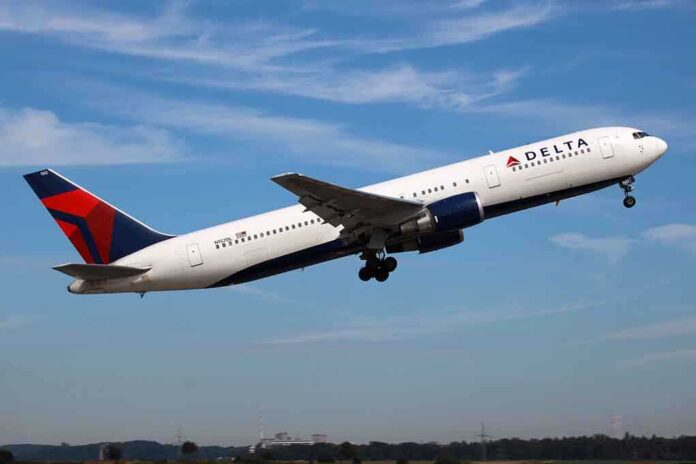
Delta Airlines grounded nearly 1,000 flights and pulled 100 planes from service after severe hailstorms battered its Atlanta hub, leaving thousands of passengers stranded with little communication or assistance.
Key Takeaways
- Severe thunderstorms on June 27 forced Delta to cancel nearly 1,000 flights across three days, with 581 cancellations on June 28 alone.
- Delta temporarily removed 100 aircraft from service at Hartsfield-Jackson Atlanta International Airport to inspect for hail damage.
- The FAA evacuated most personnel from the Atlanta airport control tower due to dangerous winds, leaving only two controllers to manage incoming flights.
- Many stranded passengers reported a lack of communication from Delta representatives and were forced to sleep at the airport as local hotels reached capacity.
- Delta has committed to providing accommodations, meal vouchers, and rental car reimbursements for affected customers.
Massive Operational Disruption at Atlanta Hub
Delta Airlines faced unprecedented operational challenges when severe weather struck Atlanta’s Hartsfield-Jackson International Airport, the airline’s largest hub. The storm system that hit on June 27 brought intense thunderstorms, dangerous hail, and microburst winds that crippled operations at America’s busiest airport. The weather event was so severe that the FAA evacuated most personnel from the airport control tower, leaving just two controllers to manage incoming flights. A ground stop was implemented from 7:11 to 8:30 p.m., preventing any aircraft from taking off or landing during that period.
The immediate impact was staggering, with Delta diverting 90 flights to other Southeast airports and pulling 100 planes from service for safety inspections. According to FlightAware data, more than 1,000 flights were delayed and over 170 were canceled at Atlanta on Friday evening alone. The disruption continued into the weekend, with 581 Delta flights canceled on Saturday, June 28, following 366 cancellations the previous day. This represents a massive spike from the 25 cancellations recorded on June 26, though even that day saw over 1,100 delays.
Safety-First Response to Weather Damage
The airline’s primary concern following the storm was ensuring the safety of its aircraft. Delta’s maintenance teams worked through the night to inspect more than 100 planes for potential hail damage, a critical safety measure before returning them to service. “By early this morning, our world-class maintenance team had already returned many aircraft to service after thorough overnight inspections,” said Erik Snell, Delta’s Chief of Operations.
“Nearly all are returning to service Saturday,” Delta stated regarding the affected aircraft. “The weather impacts have resulted in more than 380 system cancelations for Saturday. Delta expects additional delays and cancelations as teams work to safely reset aircraft and flight crews complete required rest,” a Delta spokesperson explained.
The weather event was particularly severe, with nearly an inch of rain falling in just one hour at the airport. Flash flooding extended beyond the airport perimeter, forcing the closure of northbound lanes on Interstate 75 nearby, further complicating ground transportation for travelers attempting to leave the airport. Over 100,000 personnel were reportedly involved in efforts to normalize operations at the airport, showcasing the massive scale of the recovery operation.
Passenger Experience and Communication Failures
While Delta’s focus on aircraft safety was commendable, many passengers reported significant frustration with the airline’s communication during the crisis. Thousands of travelers found themselves stranded overnight at the airport, with little information about when they might be able to continue their journeys. “There were just no Delta representatives around to give you an indication of where to go or what to do,” said Brian Barnett, one of many stranded passengers who shared their experiences with local media.
“Severe weather in Atlanta on the evening of June 27 brought intense thunderstorms, hail, windshear and reports of microburst winds — causing significant disruption to Delta’s largest hub where around 900 of our flights flow each day,” Erik Snell acknowledged in a statement addressing the situation.
Making matters worse, many passengers who attempted to find hotel accommodations discovered that local hotels were completely booked, forcing them to sleep in the terminal. Delta has since committed to providing accommodations, meal vouchers, and reimbursements for rental cars and other travel expenses incurred due to the disruptions. The airline has advised travelers to use the Fly Delta app for the most current information regarding their flights, as the situation continues to evolve throughout the weekend.
Recovery Efforts and Ongoing Challenges
Delta has mobilized significant resources to recover from this operational meltdown, but the ripple effects will likely continue for several days. “Teams across Delta are hard at work to take care of customers and recover our operation following a major weather event at our Atlanta hub June 27,” the Delta airline stated in an official communication. “Thunderstorms developed over the evening, bringing rain, lightning, hail and hazardous wind. The storm caused an evacuation and temporary power loss at the ATL air traffic control tower.”
The airline’s challenges extend beyond just aircraft availability. Flight crews have mandatory rest requirements, and many crews were displaced or reached their duty time limits during the disruption. This creates a complex logistical puzzle as Delta works to reposition both aircraft and crew members to resume normal operations. For an airline that prides itself on operational excellence, this weather event has created a severe test of its recovery capabilities and passenger communication systems, exposing weaknesses that will need to be addressed in future contingency planning.