Cartel bounties on federal agents—once the stuff of border war fiction—are now being claimed as fact by the nation’s top Homeland Security official, and the silence from Washington is only making the danger feel more real.
Story Snapshot
- DHS Secretary Kristi Noem claims cartels and gangs have put $10,000 bounties on specific ICE agents, circulating their photos among criminal networks.
- Noem’s statements followed a violent confrontation in Chicago, where federal agents shot a woman accused of attacking them with a car and semiautomatic weapon.
- No specific evidence or group names have been disclosed, raising skepticism and alarm in equal measure across law enforcement and political circles.
- The situation exposes deep fractures between federal and local authorities, with potential long-term consequences for law enforcement operations and immigration policy.
The Unprecedented Bounty Claims Rocking Law Enforcement
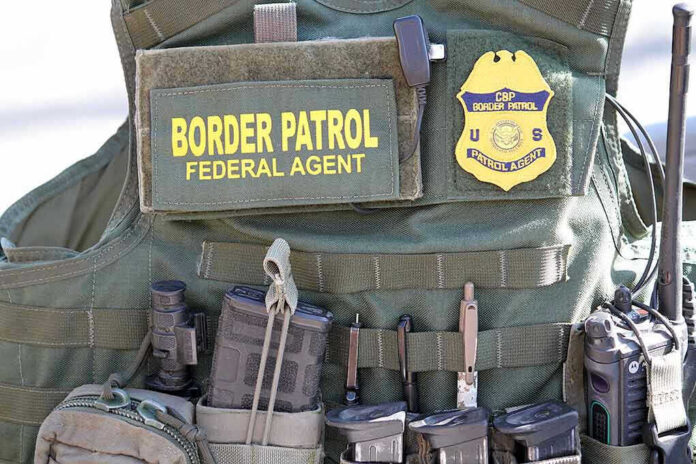
Secretary Kristi Noem upended the morning news cycle with a claim that organized crime groups have placed $10,000 bounties on the heads of named U.S. immigration agents. She spoke with chilling specificity: not only were dollar amounts named, but agents’ photos were allegedly being passed around the criminal underworld. Noem asserted that $2,000 was being offered for kidnappings, and $10,000 for killings. Yet, in a move that has only fueled speculation, she declined to provide the names of the groups or any corroborating evidence, leaving the public and the agents themselves in a cloud of anxiety and uncertainty.
This announcement came on the heels of a violent encounter in Chicago, a city that has become the flashpoint for federal-local conflict over immigration enforcement. The day before, federal agents shot a woman who allegedly rammed them with her car and reportedly brandished a semiautomatic weapon. Noem referenced this incident as an example of the escalating threats ICE and Border Patrol agents now face—not just from criminal syndicates, but from increasingly organized and confrontational protests on American soil.
Federal Raids, Sanctuary Cities, and a City on Edge
The stakes in Chicago go far beyond routine enforcement. The city’s sanctuary status and vocal opposition from Mayor Brandon Johnson and Governor JB Pritzker have made it a proving ground for the Trump administration’s most aggressive immigration crackdowns. Federal raids are now regular, and the tension between federal agents and local authorities is at an all-time high. Noem accuses local leaders not only of stonewalling but of leaving federal agents dangerously unsupported during violent protests. She points to the uniformity of protest signs and equipment as evidence of organized, possibly criminal, funding behind the unrest.
For ICE and Border Patrol agents, the threat is no longer theoretical. Noem’s claims—whether fully substantiated or not—have forced a reckoning with the possibility that being on the front lines now comes with a price tag on your head. For their families, every new headline brings fresh fear. For local officials, the allegations add fuel to an already raging political fire—one in which the stakes include both public safety and the fundamental question of who controls law enforcement in America’s cities.
Noem’s Claims: Political Tool, Real Threat, or Both?
Analysts and law enforcement professionals are split on how to interpret Noem’s warnings. Some see her statements as a political maneuver, designed to justify tough tactics and shift blame for violence onto local politicians and protesters. Immigration advocates and legal experts are quick to challenge the narrative, demanding evidence for cartel involvement in the protests. Yet, beneath the political noise, there is a sobering reality: cartels and gangs have targeted law enforcement before, even if public, specific bounties remain rare and difficult to confirm.
Noem’s refusal to provide direct evidence or name groups behind the threats has drawn skepticism from the press and policymakers alike. Major news outlets and independent analysts have requested details from the Department of Homeland Security and ICE, but as of October 6, 2025, no further information has been disclosed. The lack of transparency raises critical questions: is the threat exaggerated for political gain, or is there a deeper intelligence challenge that precludes public disclosure? Either scenario leaves agents on the ground exposed—to both physical danger and public uncertainty.
Ripple Effects: Law Enforcement, Politics, and Public Trust
In the short term, federal agents in cities like Chicago face a heightened risk environment, with operational protocols under review and morale under strain. Law enforcement leaders must balance the need for vigilance with the risk of overreaction, knowing that both inaction and excess come with their own dangers. For would-be recruits, the prospect of a cartel bounty could be a chilling deterrent, further complicating the already difficult task of staffing America’s immigration enforcement operations.
Long-term, the story underscores the deepening divide between federal and local authorities, as well as the growing entanglement of organized crime, political protest, and law enforcement. The public, left without clear answers, is left to wonder: Are these bounties a terrifying new reality, or a political ploy? Either way, the very act of raising the specter of targeted assassinations against agents marks a dangerous escalation in America’s battle over its borders—and over the soul of its institutions.