
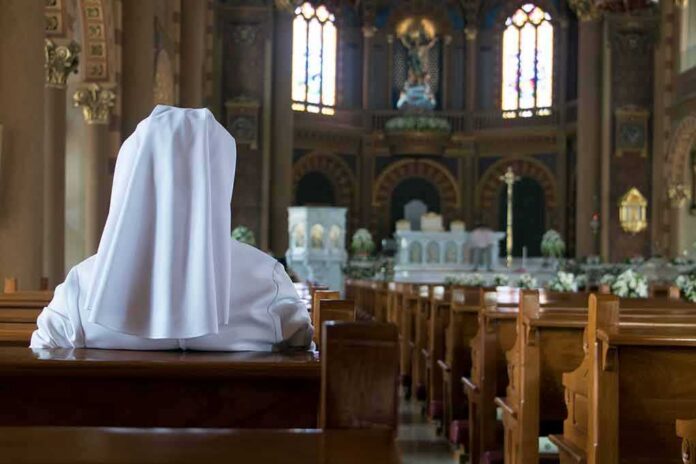
Church leaders blocked a men’s Rosary rally from the cathedral steps during a Pride parade, saying step-side prayer could look like official church sponsorship of the event.
Story Snapshot
- The Archdiocese said step-side prayer could imply official endorsement of a non-affiliated event.
- A spokesman said the group lacked prior permission to use the steps and had usually stayed on the public sidewalk.
- The group called the move a “ban,” arguing bishops cannot be “neutral” toward sin.
- Written, public facility rules and comparable past step-use examples were not provided in the record.
What the Archdiocese Decided and Why It Matters
The Archdiocese of Cincinnati told a Catholic men’s group not to pray the Rosary on the cathedral steps as the city’s Pride parade passed. The Archdiocese said the group was not affiliated with the church and step-side prayer could look like the archbishop officially backed or sponsored the gathering. A spokesman added the men had not been granted step access in the past and had generally gathered on the public sidewalk nearby, which remains open for prayer and assembly.
The church framed the move as a location rule, not a ban on prayer. The step area is church property and carries strong symbolism. Leaders worried that hosting a visible counter-event on that spot during a parade would signal an official stance or partnership the church did not intend. The record does not include a posted, written facility policy for step use, so readers cannot compare this case to rules used with other non-affiliated groups on the same site.
How the Men’s Group Described the Clash
The Christ The King men’s group said they had prayed outside the cathedral for several years during the parade and had done so peacefully. They viewed the Rosary as public prayer, not a political rally, and said the parade promoted ideas they believe conflict with church teaching. Group statements and allied posts described the decision as neutrality toward the parade and as a refusal to let Catholics pray on the cathedral’s own steps. The archdiocese disputes the “neutrality” label in the email the group shared.
The strongest documentary claim in public view is the quoted archdiocesan email that warns of implied endorsement if the steps are used. The Archdiocese’s spokesman also said there was no prior step permission on record. Still, the evidence set is thin. The public record here does not include the full email thread, any dated directive naming who decided what, or a facility-use policy. It also does not compare how other unaffiliated groups were treated on these steps during big civic events.
Why This Fight Feels Bigger Than One Sidewalk
Disputes like this repeat across the country. Property owners, including churches, often call these rules “time, place, and manner” controls. Outside groups often see them as content-based choices about which messages get a visible perch. Courts tend to ask whether a rule is neutral and consistently applied, or whether it singles out a viewpoint. That line is thin when the venue is iconic, like cathedral steps during a parade, because location itself carries a message.
English Translation for those of us not blessed to speak French: –
Paris Match article regarding The Catholic Church’s star mosaicist is accused of sexual abuse and psychological control by around twenty faithful. A poorly timed scandal ahead of the Pope's arrival in… https://t.co/2j0bblXfv7— LOUDfenceUK (@ASobocki) August 27, 2026
Americans across the spectrum see a deeper pattern. Many feel leaders talk about “neutrality” while making choices that still help one side. Religious conservatives see a church dodging a hard stand. Civil libertarians worry about selective access. In both views, institutions guard their image first and mission second. That breeds cynicism: people suspect rules shift to favor whoever holds power at the moment, not a clear standard everyone can read and trust.
What Would Clarify the Record
Three items would help settle facts. First, the archdiocese could release the full email chain and any memo on step access for parade weekend, including dates and sign-offs. Second, a written facility-use policy for cathedral steps, plus a three-to-five-year log of approvals and denials for non-affiliated gatherings during large public events, would show if the rule is even-handed. Third, sworn statements from the rector and communications office could pin down the decision path.
Until then, here is what stands. The Archdiocese told the group not to use the steps, citing risk of implied endorsement; sidewalk prayer remained an option. The men’s group called that a ban and argued that leaders cannot be neutral toward sin. The gap is partly about faith and speech, and partly about who controls a symbol-laden space at a symbol-laden time. When records are thin, symbols do the talking—and the public reads them as power choosing sides.
Sources:
lifesitenews.com, catholicstate.substack.com, sspx.org
© patriotspotlight.org 2026. All rights reserved.